
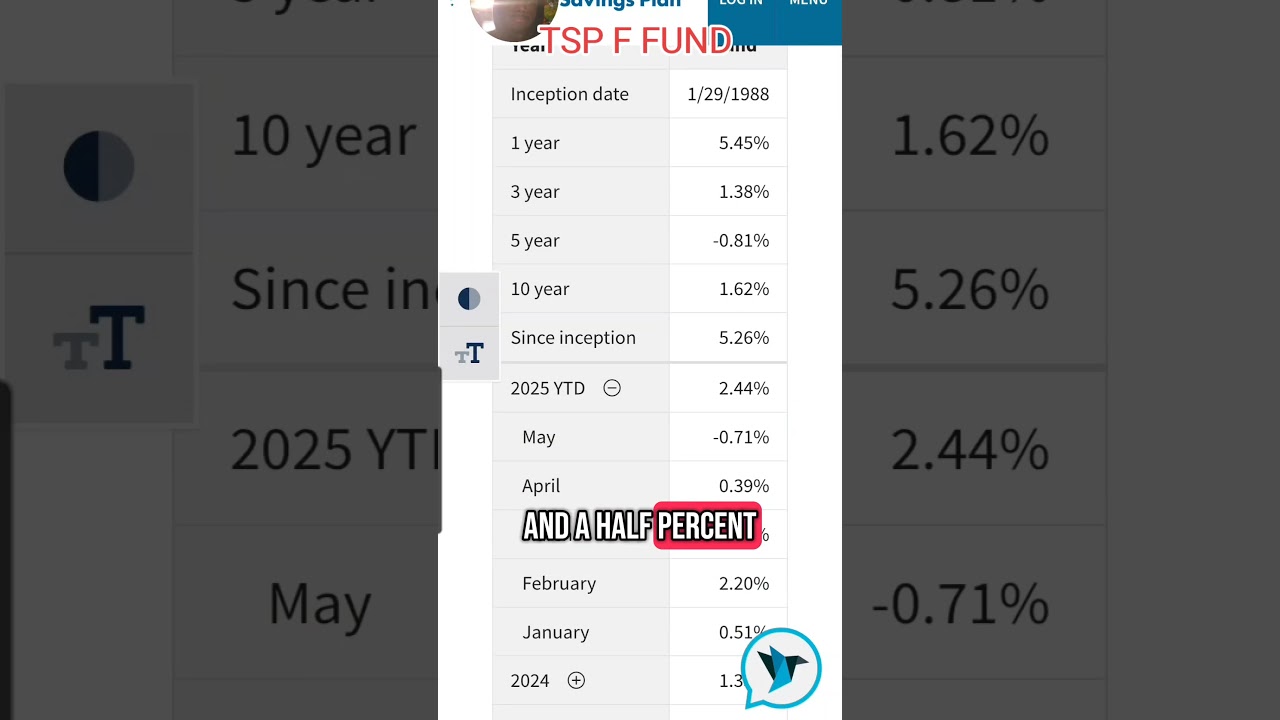

The TSP F Fund: Your Stable Foundation for Retirement
For military members and federal employees participating in the Thrift Savings Plan (TSP), the F Fund is often seen as the dependable, low-risk cornerstone of a well-diversified retirement portfolio. But what exactly is it, how does it work, and is it right for you? Let’s dive in.
What is the TSP F Fund?
The F Fund, officially known as the TSP Fixed Income Index Investment Fund, is designed to track the performance of the Bloomberg Barclays U.S. Aggregate Bond Index. This index represents a broad array of investment-grade U.S. bonds, including:
- Government Bonds: Issued by the U.S. Treasury and other federal agencies.
- Corporate Bonds: Issued by companies with strong credit ratings.
- Mortgage-Backed Securities (MBS): Bundles of mortgages guaranteed by government agencies.
Key Characteristics of the F Fund:
- Low Risk: Compared to stocks and other asset classes, the F Fund is considered relatively low-risk. Its value is less likely to fluctuate dramatically in short periods.
- Stability: Bonds tend to be more stable than stocks, making the F Fund a good choice for those seeking to preserve capital.
- Income Generation: Bonds pay interest, so the F Fund generates income that can be reinvested to further growth.
- Diversification: While primarily focused on bonds, the F Fund provides diversification within the bond market itself.
- Low Expenses: The TSP boasts incredibly low expense ratios, making the F Fund a cost-effective investment option.
How the F Fund Works:
The TSP invests the money allocated to the F Fund in a portfolio of bonds that closely mirrors the composition of the Bloomberg Barclays U.S. Aggregate Bond Index. As the index performs, so too does the F Fund (minus expenses). When interest is paid on the bonds, that income is reinvested into the fund.
Why Consider the F Fund?
- Risk Aversion: If you’re risk-averse or approaching retirement, the F Fund can provide a stable base for your portfolio.
- Portfolio Diversification: Even if you invest primarily in stocks, adding the F Fund can help to reduce overall portfolio volatility.
- Inflation Hedge: While the F Fund doesn’t guarantee inflation protection, bonds can offer some protection against rising prices, especially when interest rates are rising.
- Retirement Income: The F Fund can provide a source of income in retirement, supplementing Social Security and other sources.
Who Might Benefit from the F Fund?
- Those Nearing Retirement: As you get closer to retirement, shifting a larger portion of your TSP to the F Fund can help protect your savings from market downturns.
- Risk-Averse Investors: If you’re uncomfortable with the volatility of the stock market, the F Fund can be a more suitable option.
- Conservative Investors: The F Fund is a natural fit for those with a conservative investment strategy.
- Those Seeking Stability: If you value stability and predictability in your investment returns, the F Fund can provide that.
Important Considerations:
- Lower Potential Returns: While offering lower risk, the F Fund also typically offers lower potential returns compared to stocks.
- Inflation Risk: While bonds can offer some inflation protection, inflation can still erode the purchasing power of your investment over time.
- Interest Rate Risk: Rising interest rates can negatively impact bond prices, potentially leading to losses in the short term.
- Not a Guarantee: While the F Fund is considered relatively safe, it’s important to remember that all investments carry some level of risk.
The F Fund in a Lifecycle Fund:
If you participate in a TSP Lifecycle Fund (L Fund), the F Fund is already integrated into your portfolio. L Funds automatically adjust your asset allocation over time, gradually shifting from stocks to bonds as you approach retirement. This ensures a balance between growth and risk management.
Conclusion:
The TSP F Fund offers a stable, low-risk investment option for military members and federal employees saving for retirement. While it may not generate the highest returns, it provides a valuable foundation for a well-diversified portfolio and can be particularly beneficial for those nearing retirement or who are risk-averse. Before making any investment decisions, carefully consider your own risk tolerance, time horizon, and financial goals. Consult with a financial advisor if needed to create a retirement plan that’s right for you. #tsp #retirement #military #government #finance #money
LEARN MORE ABOUT: Thrift Savings Plan
REVEALED: Best Investment During Inflation
HOW TO INVEST IN GOLD: Gold IRA Investing
HOW TO INVEST IN SILVER: Silver IRA Investing




0 Comments