
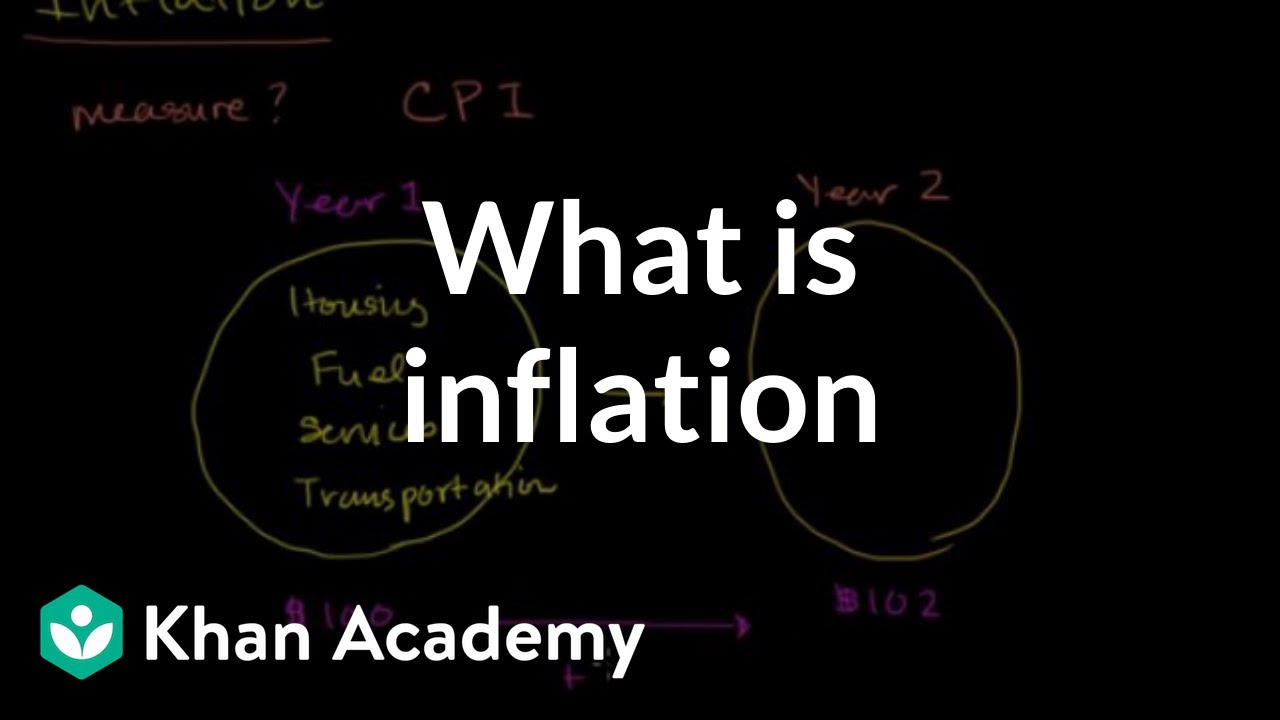

What is Inflation? Understanding the Basics
Inflation is a fundamental concept in finance and economics that refers to the rate at which the general level of prices for goods and services rises, leading to a decrease in purchasing power. Measuring inflation is essential for understanding economic health, as it affects everything from consumer spending to interest rates and investment decisions.
The Concept of Inflation
At its core, inflation indicates how much more expensive a set of goods and services has become over a specific period, typically a year. For example, if the inflation rate is 3%, it means that, on average, prices have increased by that percentage compared to the previous year. Consequently, the purchasing power of money decreases; a dollar today will buy less in the future.
Types of Inflation
-
Demand-Pull Inflation: This occurs when demand for goods and services exceeds their supply. When consumers want to buy more than what is available, suppliers can raise prices, leading to inflation. It often happens in a rapidly growing economy.
-
Cost-Push Inflation: In contrast, cost-push inflation happens when the costs of production increase, forcing producers to raise prices to maintain profit margins. This could be due to rising wages, increased prices for raw materials, or supply chain disruptions.
- Built-In Inflation: This type refers to the cycle where businesses increase prices to keep up with rising wage demands, leading workers to demand higher wages to match the increased cost of living.
Measuring Inflation
Economists utilize various indices to measure inflation, with the Consumer Price Index (CPI) and the Producer Price Index (PPI) being the most commonly used.
-
Consumer Price Index (CPI): This measures the average change over time in the prices paid by urban consumers for a market basket of consumer goods and services. This index provides insight into the cost of living and helps gauge the effectiveness of economic policies.
- Producer Price Index (PPI): This assesses the average change in selling prices received by domestic producers for their output. The PPI can give an early warning about inflation trends, as increases in producer prices often trickle down to consumers.
Effects of Inflation
Inflation can have both positive and negative effects on the economy.
Positive Effects:
- Debt Relief: Inflation can be beneficial for borrowers, as it erodes the real value of debt over time. If incomes rise with inflation, borrowers may find it easier to repay loans.
- Encourages Spending: Moderate inflation encourages consumers to spend rather than save, as the value of money decreases over time, stimulating economic growth.
Negative Effects:
- Reduced Purchasing Power: As inflation rises, each unit of currency buys fewer goods and services, leading to a decline in living standards, especially for those on fixed incomes.
- Uncertainty in the Economy: High inflation can lead to uncertainty about future costs, complicating financial planning for individuals and businesses.
Conclusion
Inflation is a critical economic indicator that provides insight into the health of an economy. Understanding the causes and effects of inflation can help individuals make informed financial decisions, such as investments, savings, and spending. Monitoring inflation rates and indices like the CPI and PPI can also aid policymakers in crafting strategies to maintain healthy economic growth while keeping inflation at reasonable levels. For learners and enthusiasts of finance and capital markets, grasping the concept of inflation is essential for navigating the complexities of economic interactions.
For further exploration of inflation and related financial concepts, resources such as Khan Academy offer comprehensive lessons that break down these topics in an accessible manner, ensuring that learners can build a strong foundation in finance.
LEARN ABOUT: Investing During Inflation
REVEALED: Best Investment During Inflation
HOW TO INVEST IN GOLD: Gold IRA Investing
HOW TO INVEST IN SILVER: Silver IRA Investing




This is muddled. Just get down to what causes inflation: increasing the money supply.
The basket of goods is hugely flawed. If someone was buying beef and then beef became too expensive due to inflation, and they had to buy chicken instead, the CPI would go down because the basket would change from calculating beef to the cheaper chicken. Also most actual major living expenses are now excluded.
When too much money chases too few goods.
I’ve watched like 3 vids on inflation and I still do not know what it means
watching this in 2020. Quarantine life bruhh
It's too bad the government doesn't always use the same basket of goods. They often swap items to get numbers to fall (or rise)
in a way that makes the CPI look like it's not moving up as much as it actually is.
What does the determined percentage that is assigned each year depend on?
We all know that high national debt in the U.S. is a bad thing, but did you know that it can actually drive inflation to higher levels over time? The reason for this is that as a country’s debt increases, the government has two options: they can either raise taxes or print more money to pay off the debt.
Why did they change the dictionary definition? To get away with the monetary crap they're doing now?
_________________________________________
< inflation is taxation without legislation >
–
—————————————-_/_/
__/
(oo)_____
(__) )/
||—-w |
|| ||
££££££££££££££££££££££££££££££££££££££££££££££££
¥¥¥¥¥¥¥¥¥¥¥¥¥¥¥¥¥¥¥¥¥¥¥¥¥¥¥¥¥¥¥¥¥¥¥¥¥¥¥¥¥¥¥¥¥¥¥¥
Cannot buy so many beans as I used to
Cost of education: people taking out so much loan to get a degree and end up with a job that don't pay much or they might not be working at all.
Yes but what CAUSES inflation to begin with?? Why do prices HAVE to go up?? Why does inflation have to happen?? I apologize if these are dumb questions, I'm just trying to figure this out. If anyone could please let me know the answers. Thank you.
Malaysians are using gold. Just because the govt. issues a paper currency doesn't mean that people aren't using their preferred monies. That Malaysia is tiny (why you felt the need to capitalize that word is beyond me) is beside the point.
BIG (see, I can do it too) countries will be going back to gold within the decade. The process of increasin gold stocks has already started in countries like China, India, Russia, et al.
"Gold coins are obsolete and anarchic?" Well, you said it, it must be true!!
The only reason that gold is not in use as money right now is due to paper legal tender laws by governments. They want to be the monopoly issuer of paper currency. It wasn't due to competition. If it were, people would use those paper notes to burn or save as novelties.
By anarchic I take it you mean old. Yep, gold as money does go way back. It's been money for thousands of years for reasons.
"Incapable of understanding…"
We agreed many posts ago that gold/silver has no intrinsic value. But what you don't grasp is that people do value it for non-monetary uses. That and its other attributes is why it wins out as a money. U-N-D-E-R-S-T-A-N-D?
I was mistaken gold is a shiny rock but the real problem is that your brain is also a rock & incapable of understand anything I have explained.
There is NO intrinsic value, NOT for paper NOT for gold. I do NOT defend paper & I certainly do NOT defend gold coins which are an obsolete & archaic system of money.
Malaysia is a TINY island nation whose primary currency is a floating paper currency called the ringgit NOT backed by gold.
Your premise is false & you're disingenuous as well as dishonest.
Gold coins are still money. Check out Malaysia. Central banks still hold gold like its money.
You have grown up your entire life with paper currency. You can't comprehend anything else. It's as natural as air to you. Two generations is a tiny sliver of time though. The paper currency system is in collapse.
Gold/silver coins can be carried around, but most people would just store it in a bank. They can use debit cards and checks priced in that weight of gold/silver.
No, you were clearly saying that gold is obsolete. A read through all of your posts strongly infers that.
You clearly said that ANY money is an emergent order. No, paper currency exist only when a state has legal tender laws in place. They have to be FORCED on a people. That is not an 'emergent order' by defintion. If you think it is, best look up the definition of emergent order.
Paper is a money substitute, not money.
Buddy here is my exact quote (within a 500 character limit) "But a gold coin monetary system is both archaic and obsolete." You may want to go back and reread our conversations and quit trying to take quotes out of context. I don't know how I could have made it more clear than that. Anyone who goes back through the diatribe of our conversation will understand fully that you keep pushing gold coin with a religious belief in value & all I keep saying is that gold has no natural value. That is all.
Our differences
1) Agreed -without losing it's -current- value
2) Non-monetary properties give it a high assigned value
3) Agreed, deservedly high assigned value as result of it's properties of rarity, longevity,
electrical & chemical
4) Agreed
5) Fungible but because it is not always a required unit of a fixed & standardized CPI it is not always amenable to liquidity which is economically wrong
6) Agreed but as a standard of exchange & not as a monetary coin
7) I need the standard not the coin
No, you didn't "actually say that gold was obsolete as a monetary coin." You said gold was a rock and obsolete. You did not qualify it. Go back and read your own comments for crying out loud.
If commodity money were in use, that doesn't mean that checks, credit cards, debit cards, gift cards, traveler's checks, and bank accounts would go away. Do you make big purchases with cash? Probably not. It would be same with gold/silver. You would have accounts priced in weights of gold/silver.
I actually said that gold is obsolete as a monetary coin. I think this, because it is impractical as a coin in this period of time when its value is tracked & traded on computers. As an exchange standard it is an excellent media to assign a value to. Its properties allow it to withstand time (key). I don't value my computer I value the information the data on it & on the internet. Money is an exchange medium & you are correct when you say paper monies are obsolete but so is trading gold coins.
Here are the reasons that gold and silver are natural monies:
1) Divisible without losing any value
2) Non-monetary value (this is key)
3) High unit value per measure of weight
4) Very durable
5) Fungible–one ounce of pure gold/silver is equal to any other ounce of pure gold/silver anywhere in the world.
6) Scarcity, but enough exists to function as media of exchange.
7) Hard but malleable so as to fashion into coins.
It's not a coincidence that they are natural monies
You keep saying gold is obsolete and a rock. Why? Your computer has certain properties. Why do you scorn gold for its properties while valuing your computer?
Money is an emergent order. It wasn't a product of central planning. Certain saleable goods progressively became media of exchange. Even if a person didn't value that commodity, they knew others would. Gold/silver were left standing when all was said and done.
Gold/silver have attributes that make them ideal monies.
"Gold 'officially' dates back a few thousands years." Try about 5,000 years.
You need to clarify that 5,000 is not coinage, it's artifacts.
Coinage is very new on the human time scale of money.
Please do explain how you easily identify the difference between 18K & 24K when you're buying your groceries and making change?
How many coins can you carry in your pocket?
How many coins can be rapidly redistributed to replace credit?
How are the coins going to tracked and separated from painted lead?
The history of money is not as old as the history of humanity. That means that gold is not the oldest form of money or trade. Gold coinage like other forms of coinage requires maintenance, upkeep & is equally impractical.
"Try about 5,000 years" like I said a few thousand. Slave commodities date 8,000 years do you defend that too?
Metal is gold's physical property, rock is it's natural state. You don't go out and dig up gold. You dig up rocks and then process gold.
Silver's a terrible coin AgO2
I won't a bit shocked if an economic collapse occurs. The way we are going now it is very likely unavoidable. On this we agree.
Events could occur that would either defer a collapse or even allow us to avoid it entirely.
1st the robotic revolution could be a repeat of the computer industry in the 80s.
2nd space exploration could generate immeasurable wealth. As in commodities from the moon, asteroids & planets.
3rd we could establish an objective & not subjective commodities standards system.
I have no paper mache, I have NOT ONCE defended paper money over gold. I have repeated that statement to you several times. Either you are ignoring it or you are a deceitful liar incapable of accepting that there is NO natural value in gold. That is all I have ever stated and continue to state. Gold, paper money, computers, cow manure, whatever commodity, object or service you wish to dream up; not ONE of them has any natural value whatsoever. None, no natural value. They only have properties.
Historical fact: The average life expectancy of a paper currency is 27-years. Meanwhile, gold and silver have been natural monies for thousands of years.
I'm not religious, but if I were, I'll take my golden calf over your papier mache one any day of the week.
I suspect you are going to be in a state of shock when the currency crisis comes. All the signs are there if you know monetary history. Sadly, you don't understand the nature of money, nor have you read enough of monetary history.
"Gold coin is both archaic and obsolete?" Don't confuse governments making themselves monopoly issuers of political currency, i.e. paper currency, for a real competition. Absent legal tender laws that require a person to acquire Federal Reserve notes to pay taxes and not being able to refuse them in payment of a debt is the only reason that paper is used.
"Archaic." Paper is a very old idea, too. It's not bad because it is old; it's bad because it fails.
"I think you meant history of gold, not money." The history of money is largely a history of gold/silver.
"Gold 'officially' dates back a few thousands years." Try about 5,000 years.
"Standardized currency?" You mean government seeks to make itself monopoly issuer.
"It's a rock." No, it's a metal and a commodity.
"Just like other commodities." No, gold and its little brother silver have all the properties of good money. They win out absent paper legal tender laws for those reasons.
Of course data bits are not money. They are the recorded assigned -values associated with goods and services as tracked in the worlds varied electronic economic systems. Paper money, gold money, sea shells barely even exist anymore. What we buy, sell, trade… is barter/valued in millions of computers across a mesh network. When you rant about billion dollar bailouts (as we all should) no money is ever printed anymore. It is all done in data bits in thousands of banks. Welcome to the real world.
What is a "storehouse of value" that has no objective meaning. Value is assigned so you can not physically store a value in a storehouse. You can count the assigned value associated with a physical volume of commodities placed in a storehouse but you can not physically store a value. Data bits are no different than value. As a matter of fact, the data assigned to a bit is called an "assigned value" for a reason. Also, you can store that value in a register (neither of which physically exist).
My computer is not precious. It is easily replaced using any number of easily obtained currencies including credit (although I seriously doubt any store would take gold). The statement that computers have no value is correct. Computers have properties and perform services, they do not have value. Other people assign value to computers, I do not, I own several and none of them have value. I place more -value- on the data bits than I do the hardware. I subjectively assign the value to the data.
I think you meant the history of gold and not the history of money. Gold artifacts only date back a few thousand years. Gold coins are even younger than gold artifacts. The natural properties of gold -once they were understood- made it -the- obvious choice for a standardized currency. It's not magic it's a rock with properties that made it the primary choice before computers. Now it's a good standard, just like many other commodities. But a gold coin monetary system is both archaic and obsolete.