
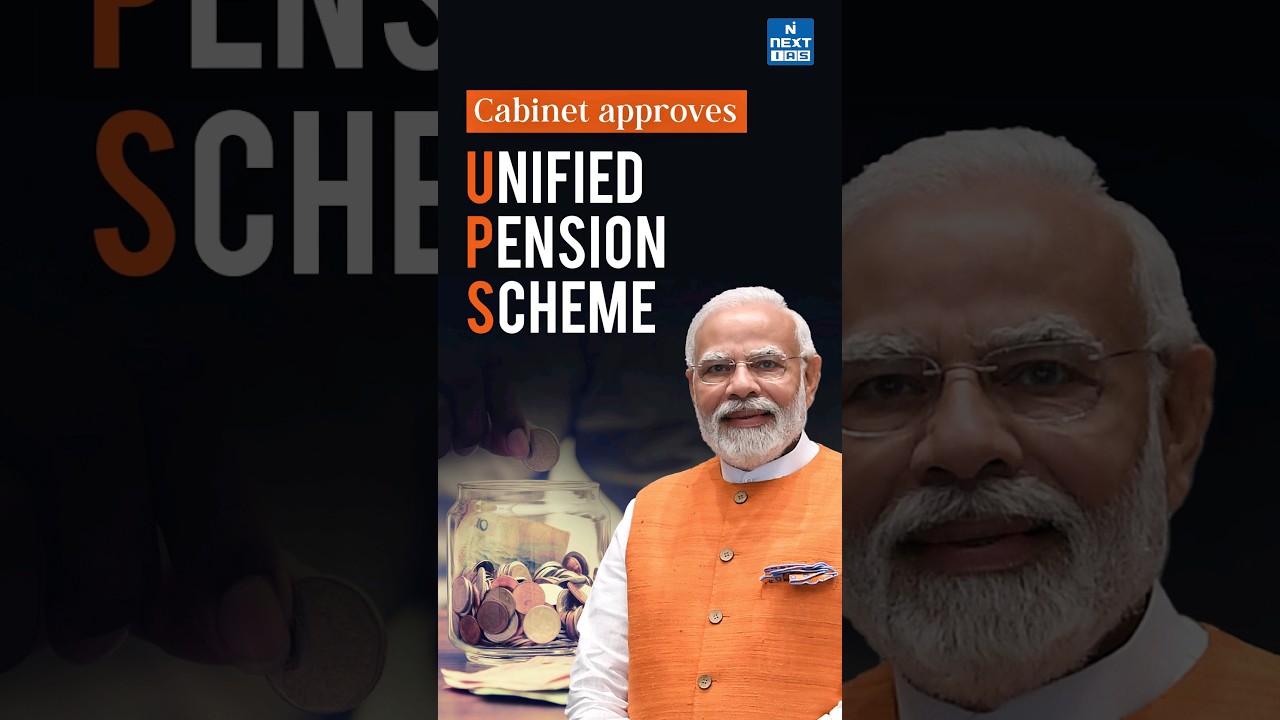

Unified Pension Scheme Explained: UPS vs OPS | UPSC Current Affairs 2024
The debate around pension schemes in India is a recurring theme, especially relevant for the UPSC Civil Services Exam. The tussle between the Old Pension Scheme (OPS) and the New Pension Scheme (NPS) is well-known. However, the concept of a Unified Pension Scheme (UPS) is emerging as a potential middle ground, aiming to address the shortcomings of both systems. This article will delve into the nuances of UPS, comparing it to OPS and NPS, and exploring its relevance for UPSC current affairs in 2024.
Understanding the Old Pension Scheme (OPS)
The OPS, applicable to government employees who joined service before January 1, 2004, offered the following key features:
- Defined Benefit: Pension was a fixed percentage (typically 50%) of the last drawn salary.
- No Contribution: Employees did not contribute to their pension corpus during their service.
- Government Funded: The entire pension burden was borne by the government from its consolidated fund.
- Inflation Indexed: Pension was linked to inflation, providing protection against rising prices.
Drawbacks of OPS:
- Fiscal Burden: The OPS placed a significant strain on government finances, especially with an aging population.
- Unsustainable Model: It was argued to be an unsustainable model in the long run, diverting funds from crucial developmental projects.
- Inter-Generational Equity: Younger generations were effectively subsidizing the pensions of older generations.
The New Pension Scheme (NPS): A Shift to Defined Contribution
The NPS, introduced in 2004, aimed to address the fiscal concerns associated with the OPS. Its key features include:
- Defined Contribution: Employees contribute 10% of their salary, matched by the government (typically 14%).
- Market-Linked Returns: The accumulated corpus is invested in market-linked securities, offering potential for higher returns.
- Portability: Employees can transfer their pension account across jobs and locations.
- Partial Withdrawal: Allows for partial withdrawals under specific conditions.
Challenges of NPS:
- Market Volatility: The returns are subject to market fluctuations, creating uncertainty about the final pension amount.
- Lower Returns (Potentially): While offering the possibility of higher returns, the NPS also carries the risk of lower returns compared to the guaranteed benefits of OPS.
- Lack of Assured Benefit: No guaranteed pension amount makes it unattractive for many government employees.
- Retirement Planning Complexity: Requires employees to actively manage their investment choices.
Enter the Unified Pension Scheme (UPS): A Hybrid Approach
The Unified Pension Scheme (UPS) is an emerging concept aiming to combine the best features of both OPS and NPS. While the specific details of UPS are still under discussion and may vary across states or countries, the core principles often include:
- Defined Benefit Component: A portion of the pension is guaranteed based on years of service and last drawn salary, providing a safety net.
- Defined Contribution Component: A portion of the pension is linked to market-based returns, offering the potential for higher income.
- Flexibility in Contribution: Allows employees to choose the proportion they contribute, within certain limits.
- Government Support: The government provides a certain level of support, ensuring the sustainability of the scheme.
- Risk Mitigation: Mechanisms to mitigate market risks and protect pension corpus.
Benefits of a Potential UPS:
- Fiscal Responsibility: By incorporating a defined contribution component, the UPS aims to reduce the fiscal burden on the government compared to the OPS.
- Attractive to Employees: The defined benefit component provides a safety net, while the defined contribution component offers the potential for higher returns.
- Sustainable Model: By combining defined benefit and defined contribution, the UPS aims to create a more sustainable pension system for the long term.
- Promotes Financial Inclusion: Encourages employees to participate in the financial markets and plan for their retirement.
Relevance for UPSC Current Affairs 2024:
The UPS is a relevant topic for the UPSC Civil Services Exam in 2024 for several reasons:
- Government Policy: Pension reforms are a crucial aspect of government policy and fiscal management.
- Economic Implications: The choice of pension scheme has significant implications for government finances, economic growth, and social security.
- Social Justice: Pension schemes impact the well-being of government employees and retirees.
- Current Events: Several states are considering or have already implemented modifications to their pension schemes, sparking debate and discussions.
Exam Perspective:
UPSC aspirants should be prepared to answer questions on the following aspects:
- Comparison of OPS, NPS, and UPS: Understand the key differences and similarities between the three schemes.
- Pros and Cons of each scheme: Analyze the advantages and disadvantages of each system from various perspectives (government, employees, economy).
- Sustainability of Pension Schemes: Discuss the fiscal challenges of pension systems and potential solutions.
- Impact on Economic Growth: Analyze the impact of different pension schemes on investment, savings, and economic development.
- Recent Developments: Stay updated on the latest policy announcements and debates related to pension reforms.
Conclusion:
The Unified Pension Scheme represents a potential way forward in addressing the challenges of both the Old and New Pension Schemes. While the exact details and implementation of UPS are still evolving, understanding its core principles is crucial for UPSC aspirants. By analyzing the nuances of OPS, NPS, and UPS, candidates can gain a comprehensive understanding of the complexities of pension reforms in India and their broader implications for the economy and society. Keeping abreast of current developments and policy changes in this area is essential for success in the UPSC Civil Services Exam.
LEARN MORE ABOUT: Retirement Pension Plans
REVEALED: Best Investment During Inflation
HOW TO INVEST IN GOLD: Gold IRA Investing
HOW TO INVEST IN SILVER: Silver IRA Investing




Is Unified Pension Scheme an Effective Solution or a Political Token? Let us know your thoughts in the comment section down below!
Our demand is OPS.
80% employees deprived of this scheme.
ops only
only ops
Kya pension age 60 sall hone ke baad milega?????
If one has service more than 30 years, NPS is more beneficial.
Some one please answer what will happen to the money already in NPS account when we switch to the UPS scheme in April 2025? Will that money be allowed to be withdrawn?