
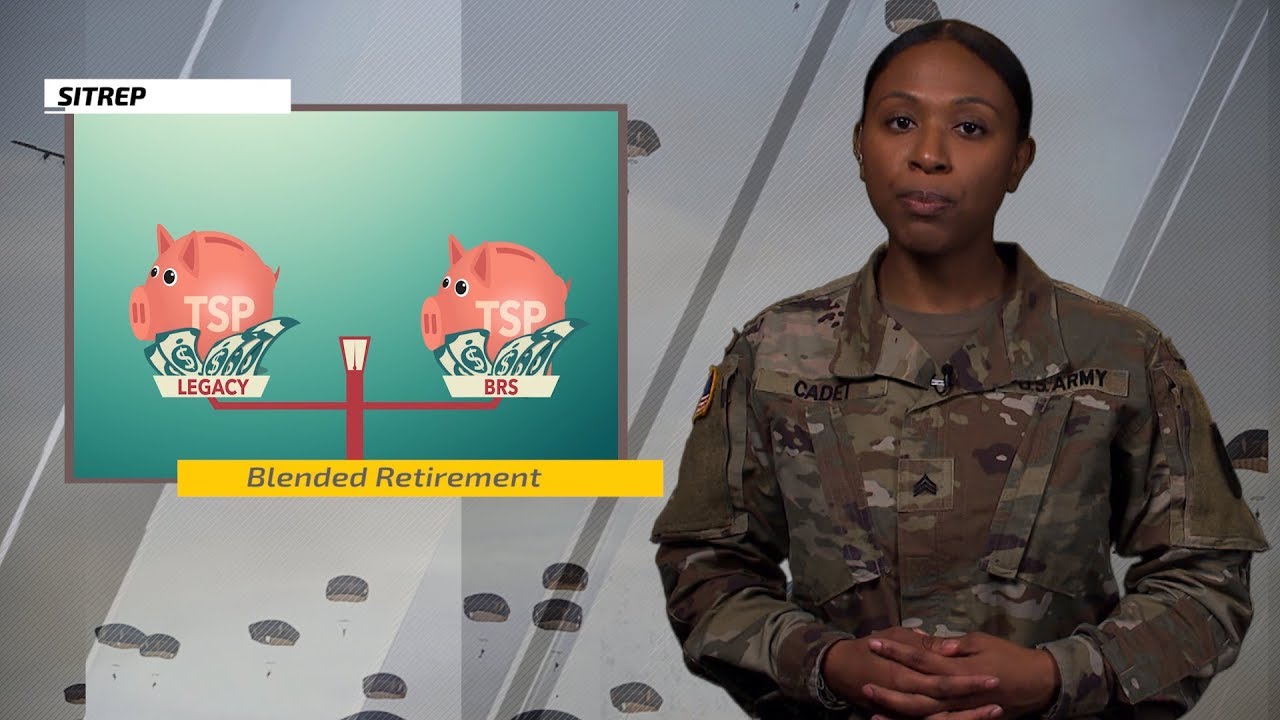

SITREP: Understanding the Blended Retirement System (BRS)
Introduction
The Blended Retirement System (BRS) represents a significant shift in how the United States military compensates its service members. Officially implemented on January 1, 2018, this new retirement plan blends elements of a traditional pension with a defined contribution plan, fundamentally altering the landscape of military retirement benefits. This article aims to provide a comprehensive overview of the BRS, its benefits, and its implications for current and future service members.
What is the Blended Retirement System?
The BRS combines two primary components: a traditional pension plan and a Thrift Savings Plan (TSP) similar to those found in the private sector. Here’s a breakdown of its features:
-
Service Members’ Pensions: Under the traditional retirement system, service members typically received 50% of their base pay after 20 years of service, with an additional 2.5% for each additional year. The BRS modifies this by reducing the pension benefit to 40% after 20 years, plus 1% for each additional year of service, but offers more immediate financial benefits through the TSP.
- Thrift Savings Plan Contributions: The BRS automatically enrolls service members in the TSP, where a portion of their pay is contributed. Members can opt to contribute more, with the government matching contributions up to a certain percentage, which gives service members the opportunity to build a significant retirement savings account.
Key Features of the BRS
-
Automatic Enrollment: All active duty and selected reserve service members entering service after January 1, 2018, are automatically enrolled in the BRS, providing immediate access to the TSP and ensuring they start saving for retirement from day one.
-
Government Contributions: The BRS includes automatic government contributions equal to 1% of a member’s basic pay, regardless of whether the member contributes to their TSP. Additionally, if service members contribute at least 5% of their pay, the government will match their contributions up to 4%.
-
Potential for Portability: The BRS allows for greater portability of benefits, making it a more attractive option for service members who may leave active duty before reaching retirement eligibility. This flexibility helps service members transition into civilian life without losing their retirement savings.
- Continuation Pay: Service members can receive continuation pay after completing a minimum active duty service requirement (usually between 12 and 16 years). This bonus is intended to incentivize service members to stay in the military and is an additional form of financial support.
Who Benefits from the BRS?
The BRS has been designed to benefit a diverse range of service members:
-
Younger Service Members: For those who do not plan to stay in the military for 20 years, the blended system offers the opportunity to take advantage of the TSP and government matches, potentially resulting in a more substantial retirement fund than the traditional pension would provide.
-
Reservists and Those with Varied Service Time: Service members who serve short-term or in the reserves may find the BRS more beneficial as it allows for better savings and more flexibility than the traditional system.
- Transitioning Veterans: The BRS supports service members who might leave active duty earlier by allowing them to retain their TSP savings, which can be utilized in civilian life.
Conclusion
The Blended Retirement System signifies a transformative approach to military retirement, catering to the evolving needs of service members in a rapidly changing workforce. By blending a pension with a defined contribution plan, the BRS not only enhances financial security for those who serve but also acknowledges the realities of modern career trajectories. Understanding this system is essential for current and future service members, as it equips them with the knowledge to make informed financial decisions throughout their military careers and beyond.
For further information on eligibility, contributions, and retirement planning under the BRS, service members should consult their respective branch’s resources or financial counseling services available to them.
LEARN MORE ABOUT: Thrift Savings Plans
REVEALED: Best Investment During Inflation
HOW TO INVEST IN GOLD: Gold IRA Investing
HOW TO INVEST IN SILVER: Silver IRA Investing




0 Comments