

Vanguard Tells the Truth About retirement account Balances
In an era where financial literacy is crucial, understanding retirement accounts is more important than ever. Vanguard, one of the largest asset management companies in the world, has recently shed light on the state of retirement account balances for its investors. This information is not just enlightening; it also serves as a call to action for those planning for their retirement.
Understanding the Findings
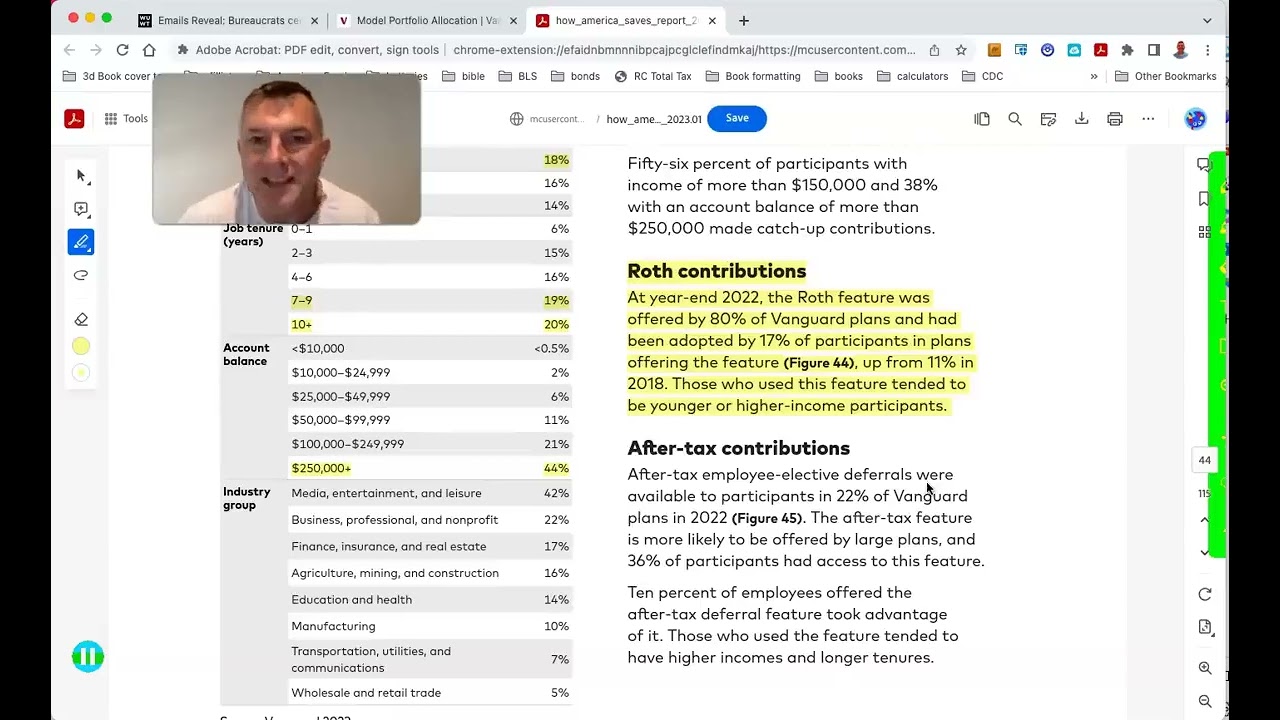
Vanguard’s latest report provides an in-depth analysis of retirement account balances, which includes 401(k)s, IRAs, and other retirement vehicles. The findings reveal essential insights into how different demographics are preparing for retirement. Here are some key takeaways from their research:
-
Average Balances Vary Widely: The average retirement account balance is often misleading. Vanguard points out that while the average balance may appear substantial, the median balance tells a different story. A few high balances can skew the average, making it look healthier than it is for the majority of account holders.
-
Age Matters: Vanguard highlights that age greatly affects account balances. Younger individuals tend to have lower balances as they are typically early in their careers and may not have started contributing to retirement accounts. Conversely, older individuals, particularly those in their 50s and 60s, often have significantly higher balances, as they have had more time to save and benefit from compound interest.
-
Impact of Company Contributions: One of the most significant findings is the role of employer contributions in retirement savings. Companies that offer matching contributions can dramatically increase the retirement savings of their employees. Vanguard urges individuals to take full advantage of these offerings, as they represent “free money” and an opportunity for accelerated growth in retirement accounts.
- Withdrawal Patterns: Vanguard’s research also sheds light on withdrawal patterns during retirement. Many retirees experience challenges due to insufficient savings. The report emphasizes the importance of planning not just for how much to save, but also for how to withdraw those savings strategically in retirement.
The Need for Financial Education
With these findings, Vanguard calls for increased financial education and proactive retirement planning. Many individuals are unaware of how much they should be saving or the best strategies to grow their retirement accounts. Understanding the nuances of account types, tax implications, and investment options is essential for optimizing retirement savings.
Vanguard encourages individuals to:
-
Start Saving Early: The earlier one begins saving for retirement, the more time their money has to grow. Compound interest can significantly increase savings over time.
-
Stay Informed: Regularly reviewing one’s retirement plan and staying informed about changes in tax laws, investment options, and retirement savings vehicles is crucial.
- Consult Professionals: Financial advisors can provide personalized strategies that align with individual goals, risk tolerance, and timelines.
Conclusion
Vanguard’s recent analysis of retirement account balances serves as a timely reminder of the importance of planning for retirement. By accurately representing account balances and encouraging proactive financial education, Vanguard helps investors understand the true landscape of retirement savings. For many, this could be the push needed to take concrete steps toward a more secure financial future.
As Vanguard aptly states, retirement planning is not just about accumulating a certain amount of money; it is about ensuring financial freedom and peace of mind in one’s golden years. Knowledge is power, and in this case, it can indeed pave the way to a prosperous retirement.
LEARN MORE ABOUT: IRA Accounts
INVESTING IN A GOLD IRA: Gold IRA Account
INVESTING IN A SILVER IRA: Silver IRA Account
REVEALED: Best Gold Backed IRA



Like Vanguard data is representative of the entire US population. DUH
I'd like to know the average and median balance of the combined 401k and rollover IRA account of customers that have both at Vanguard. I bet that dollar figure is pretty large. I'm not sure how large that population having both at the same company is and I'm not sure it's possible to get the data if they have the two accounts at different companies, but this is the number that would mean something.
These average and median studies on just the 401k accounts are skewed low by people that have rolled their old ones into an IRA and also the people that have multiple 401k's. Their 401k balance should be the sum of the multiple accounts, not an average of them.
I think that one issue with "average" or even "median" balances is that many professionals rarely stay at the same company for their entire career. The Engineers I worked with throughout my work life had almost all worked for at least 3 different companies and many had not 1, but 2 or 3 401K's. So if a guy has a 401K from his first job, it might have $10000 in it. However, his second company (now that he has more experience) might have $80000, and his finally company he has $420000 in his 401K… Therefore, he actually has $510000 in his total accounts, but his "average" is only $170000K. The fact that many people I know never combined their accounts means they have more than any average would suggest. I think when these studies are done there is rarely any effort to combine the various accounts that people have.
"Vanguard has customer service issues…" is the understatement of the decade. When one has to wait to talk to a representative for nearly an hour, that is DMV-level ineptitude. I took my money out the next day. Luckily I was able to close the account online.
I made 60 and deferred 30. It depends on what your living expenses are which in turn depends on where you are living/working.
So, if I may, to sum up the article: DUH!!
your aside about job hopping is outdated and betrays a lack of research. the average increase people receive when changing jobs is 6%. the average yearly increase employers give is 3%. Companies mostly do not offer longevity benefits. Companies largely do not offer equity. Companies largely do not offer training. There are no compelling reasons to stick around in the average job these days. The grass may not be greener elsewhere but your paycheck will be. You should be changing jobs every 2-3 years unless your current job is actually doing something to keep you around.
It is all about personal responsibility. individuals need to be responsible for their own retirement.