

How Much Income Will Your TSP Really Provide in Retirement?
The Thrift Savings Plan (TSP) is one of the cornerstone benefits for federal employees and members of the uniformed services, offering a robust retirement savings option. With its appealing features like low fees, a variety of investment funds, and tax advantages, the TSP plays a crucial role in many individuals’ retirement plans. However, understanding how much income it will actually provide in retirement is essential for effective financial planning.
Understanding the TSP
The TSP is a defined contribution plan, meaning the retirement income you receive will depend on the contributions you make, any employer matching contributions, and the investment performance of your chosen funds. Unlike defined benefit plans, which promise a specific payout at retirement, the TSP provides flexibility but places the onus of planning squarely on the individual.
Factors Affecting TSP Income
-
Contribution Levels: The amount you contribute to your TSP directly impacts your retirement savings. For 2023, the contribution limit for employees under 50 is $22,500, while those aged 50 and over can contribute an additional $7,500 as a catch-up contribution. Maximizing these contributions can significantly bolster your retirement savings.
-
Investment Choices: The TSP offers several funds, including the G Fund (Government Securities Investment Fund), F Fund (Fixed Income Index Fund), C Fund (Common Stock Index Fund), S Fund (Small-Cap Stock Index Fund), and I Fund (International Stock Index Fund). Each fund has different risk levels and potential returns. The allocation of your investments will determine how your savings grow—more aggressive portfolios may yield higher returns over the long term but come with increased risk.
-
Time Horizon: The length of time until retirement plays a crucial role in your TSP growth. The earlier you start saving and investing, the more time your investments have to compound. A longer investment horizon can help mitigate risk as you don’t have to rely on short-term market fluctuations.
-
Withdrawal Strategy: How you withdraw from your TSP in retirement can greatly influence your income. You can choose to withdraw a lump sum, periodic payments, or transfers to an IRA. Each method has different tax implications and impacts your remaining balance, so planning your withdrawal strategy is critical.
- Market Performance: Economic conditions and market performance can affect your TSP balance at retirement. While you can’t control the market, you can plan for different scenarios and consider maintaining a diversified portfolio to help buffer against volatility.
Estimating TSP Income
To estimate the income your TSP will provide during retirement, follow these steps:
-
Calculate Your Total Savings: Add up your contributions, employer match (if applicable), and projected investment growth.
-
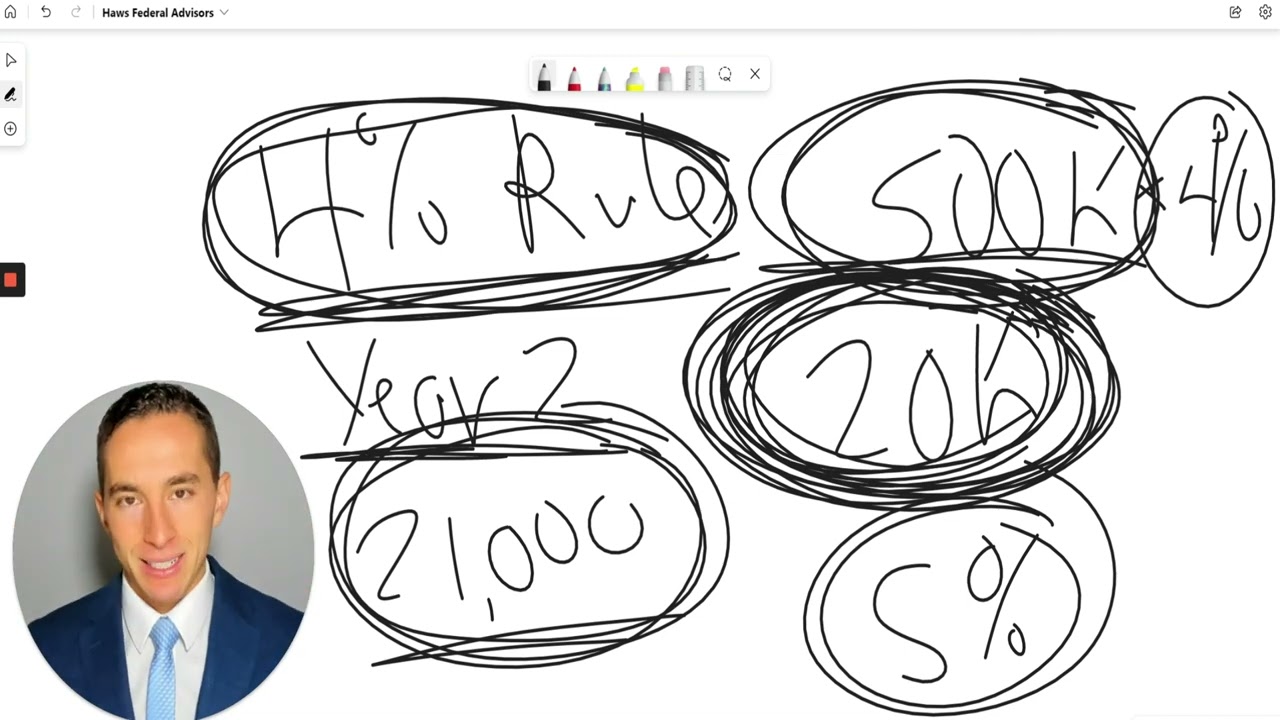
Choose a Withdrawal Rate: A common rule of thumb is the “4% rule,” which suggests that retirees withdraw 4% of their total retirement savings annually. Adjust this based on your unique circumstances and planned expenses.
-
Factor in Other Income Sources: Consider other income sources, such as Social Security and pensions, to get a complete picture of your retirement income.
- Use a Retirement Calculator: Online retirement calculators can help simulate different scenarios based on your inputs, including contribution levels, retirement age, and expected returns.
Conclusion
Determining how much income your TSP will provide in retirement is not a straightforward task. It depends on numerous variables, including your contributions, investment choices, withdrawal strategies, and overall market performance. To ensure a secure retirement, it’s essential to start early, maximize contributions, understand your investment options, and engage in proactive planning. Regularly reviewing your TSP strategy with a financial advisor can help you refine your approach and adjust to any changes in your financial circumstances or retirement goals. By taking these steps, you can work towards a retirement that meets your expectations and provides the financial security you deserve.
LEARN MORE ABOUT: IRA Accounts
INVESTING IN A GOLD IRA: Gold IRA Account
INVESTING IN A SILVER IRA: Silver IRA Account
REVEALED: Best Gold Backed IRA




Great video explaining the 4% rule, but I'm thinking, I need half a million in my TSP for a puny $20k a year? The average TSP at retirement is only $200k. That's less than minimum wage. Sounds like taking a lump sum of $500k or whatever at retirement would be a lot more fun. I still will have my pension and social security to survive on.
In reality, retirees generally physically decline considerably by the age of 80. Thus, as long as an individual has enough money to last until 80 years of age, they're fine. It's really only about 15 years of retirement for the average person to remain active and enjoy life. After that, it's a downward slope that will end in death quickly (if you're lucky) or a nursing home..
As many have already asked/discussed….do we need to tone that down to 3% now?
On the TSP website, how do I look at my traditional and Roth balances? It used to be very easy.
Well. It’s a lot less after this 20% drop in the C fund. More to come?
For retirement, they use your salary from top 3 years' salary, correct? Do they use base pay or the pay with locality?
I was told by a Financial Counselor that the "4% Rule" is really adjusted down to 3% or, at most, 3.3% today. Based on that advice I have been using 3.3% for my calculations. This is a major issue as If I used 4% as you indicate I make up 1/2 the SS payment I won't be taking until 67 VS. using 3-3.3% ? Thoughts?
Also, might I suggest a video showing drawing down TSP on say $500K from 62-67 to make up for not taking SS and then taking SS at 67, and what that does to the TSP portfolio through 85-90 or so? I suspect that would help a lot of people.
Please discuss required RMD vs TSP withdrawals. RMD’s can exceed 4% or more.
smacking lips
Haws; please do a video on the new TSP website. More specifically, navigating viewing your past investments, quarterly statements, monthly income if you retire during a specific year. A persons yearly statement would have the amount they would receive is they retired at that moment. Where is that within the new TSP site.
Love your video’s!
New study says 3.5% is the New standard due to the market volatility
After 4 years of Joe "sniffy" Biden…..i'd say ZERO!
Sould I move my TSP to a different investment company before retirement ?
What asset allocation do you recommend using the 4% rule?
If you are a 30 plus year FED, maybe with a spouse who also had a career and plan right (minimal debt/paid off or close to it house) you can easily live of your FERS pension and Social Security and not touch your TSP. TSP can be for the fun stuff you denied yourselves all those years.
Unfortunately, if you're taking out your TSP payments by installments there is no way to adjust them on the new web site. Apparently, you have to call.
I love your website I am learning so much !!
Great information. I rolled my my TSP out to loan on Real Estate
Lol
No disrespect but who has 500k in their retirement tsp? I know a few but damn with a family, bills and not splurging on yourself I cant see how
I usually don't comment but I love your videos and they help me so much. Thank you.
Can we talk about how absolutely terrible the new TSP website is? You should do a video on how to attempt to navigate that horrendous website. Love your videos. Thank you.
4% rule assumes your investment is in a mix of stocks and bonds that is more aggressive than the L-Income fund.
You don’t need as much money in your 80s and 90s as you do in your 60s and 70s.
4% is far too conservative and most often leads to a widow paying huge taxes on RMDs or leaving a large estate to beneficiaries. I take out 8% and reinvest at least half if not more back into a taxable brokerage account. If I wait til 70 for SS, a lot of the TSP will have been reinvested, I'll have a huge taxable account and won't be paying hardly any taxes. If I pass early, my wife will be very comfortable and not saddled with the "widow tax" and will still most likely leave a large inheritance, if we don't spend it down. Win, win.
Wow, missed the boat on that one. I was under the impression that you re-figure the 4% each year. Thanks for sharing.