
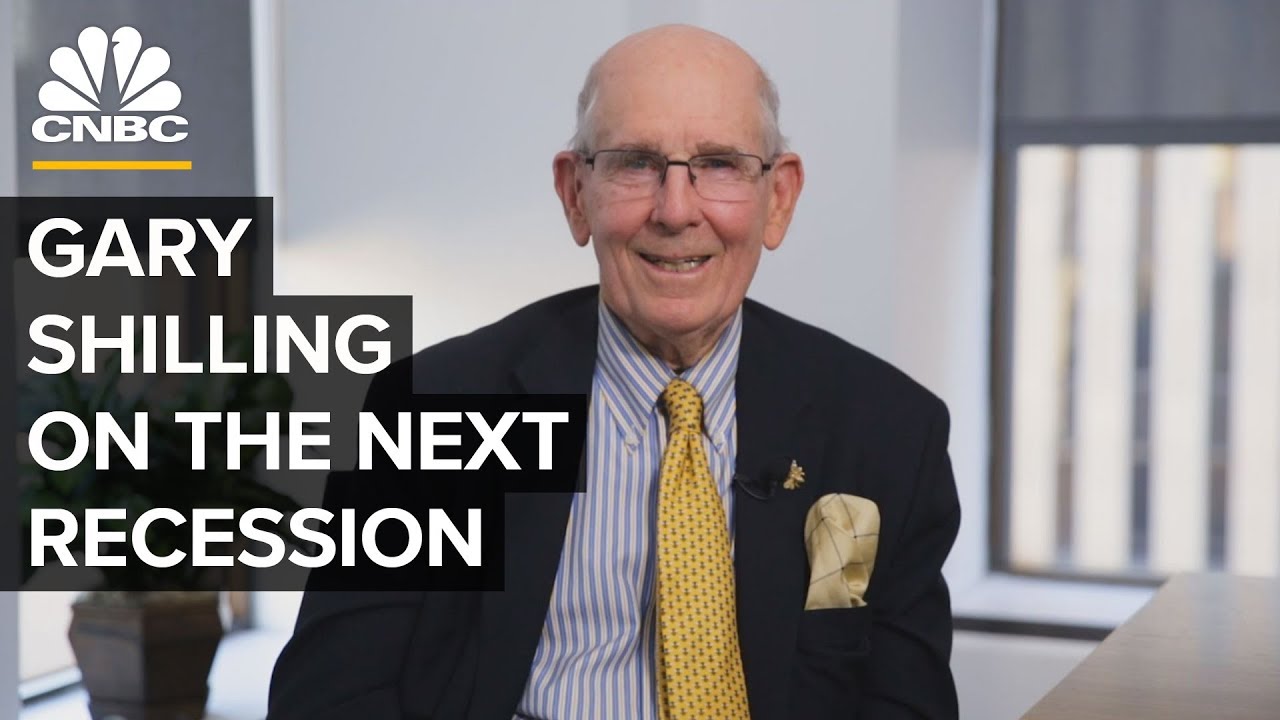

What Will Cause The Next Recession? Gary Shilling Thinks It’s The Fed
As the global economy remains in a state of flux, many analysts and economists are on high alert, anticipating the potential onset of the next recession. Among the voices weighing in on this topic is Gary Shilling, a renowned economist, and market strategist, whose insights often carry significant weight in financial circles. Shilling has consistently indicated that the Federal Reserve’s actions will play a crucial role in precipitating the next economic downturn.
The Fed’s Role in Economic Cycles
To understand Shilling’s perspective, it is essential to consider the Federal Reserve’s influence over the economy. The Fed has the dual mandate of promoting maximum employment and stabilizing prices. To achieve these goals, it frequently employs monetary policy tools, including adjusting interest rates, engaging in open market operations, and influencing the money supply. Historically, the Fed has been viewed both as a stabilizing force and, at times, a catalyst for economic upheaval.
Gary Shilling argues that the current trajectory of Fed policy—especially the rapid rate hikes implemented in response to rising inflation—may ultimately disrupt economic growth. The central bank’s decision to raise rates significantly in a relatively short period has fueled concerns about the potential for an overcorrection that could lead to a slowdown in consumer spending, business investment, and job creation.
The Impact of Rising Interest Rates
Shilling highlights that rising interest rates not only make borrowing more expensive for consumers and businesses but also impact asset prices. As mortgage rates climb, the housing market tends to cool, which in turn affects related industries such as construction, real estate services, and home goods. Furthermore, higher rates can lead to reduced consumer confidence, as individuals may delay significant purchases in anticipation of worsening economic conditions.
In his analysis, Shilling has pointed out that the Fed’s actions are compounded by existing challenges such as supply chain disruptions and geopolitical tensions, which have already strained the economy. The confluence of these factors could create an environment ripe for recession, exacerbating the issues tied to aggressive monetary tightening.
Historical Context
Shilling’s views are not unfounded. Historically, periods of aggressive rate hikes by the Federal Reserve have often preceded economic downturns. For instance, in the late 1970s and early 1980s, the Fed, under Chairman Paul Volcker, raised interest rates sharply to combat rampant inflation, leading to a recession. The balance between curbing inflation and fostering economic growth is delicate, and Shilling warns that the Fed’s current strategy may risk repeating past mistakes.
The Bigger Picture
Beyond the immediate concerns related to interest rates, Shilling emphasizes the need for a broader understanding of the economic landscape. Factors such as labor market dynamics, fiscal policy responses, and global economic conditions also play critical roles in shaping the trajectory of growth. However, Shilling remains steadfast in his belief that the Fed’s actions will be a primary catalyst in any forthcoming recession.
In conclusion, while predicting the precise timing and cause of economic downturns is notoriously difficult, Gary Shilling’s analysis serves as a potent reminder of the Federal Reserve’s significant influence on economic health. As the central bank continues to navigate the challenges of inflation, employment, and financial stability, the potential repercussions of its policies warrant close scrutiny. For investors and policymakers alike, understanding the implications of the Fed’s decisions may be crucial in mitigating the risks associated with future recessions.
LEARN ABOUT: Investing During Inflation
REVEALED: Best Investment During Inflation
HOW TO INVEST IN GOLD: Gold IRA Investing
HOW TO INVEST IN SILVER: Silver IRA Investing




Hinayop kana Wala ka naman nakuwang Pera na sira kana Ng husto
Sira ka na napag laruan kapa sira ka dahil sa treade nayan na nahusgahan ka na husto at nasira UTAk mo sa ginawa ninyo sa buhay ko na PAG KASIRA Ng husto dahil sa treade nayan na umangat kayo sa PAG sira ninyo sa buhay ko sa kakahiyan nag laru kalang sira kapa Ng husto sa kakahiyan nayan Ng laro Ng currency nayan
The abolition of the antithesis between town and country is no more and no less utopian than the abolition of the antithesis between capitalists and wage workers(Engels)
The supply chain is being held up by the fascist Union Pacific Railroad in Burlington northern Santa Fe And they can’t offload the ships because the containers are all piled up at the railroad ain’t moving him out nothing is going to get done
This guy thinks way too much of himself. Someone needs to tell him he's been wrong 90% of the time
2018.He was wrong.
Bet you didn't see a global pandemic coming
CORONAVIRUS.
I've been investing for some years now but have found that pretty well everything I read or watch online is either useless or would be harmful to my finances. This video included!
1:30 in listen very carefully he was about to say ''Afghanistan'' and he changes it for ''emerging markets''…
How does a recession really work? A recession is not caused by anything THE FEDERAL RESERVE nor the GOVERNMENT does. RECESSIONS AND DEPRESSIONS ARE CAUSED BY YOUR NEIGHBORHOOD PRIVATE COMMERCIAL BANK BECAUSE IT IS THEY WHO CREATE MOST OF WHAT WE USE FOR MONEY TODAY.
When you go to a commercial bank to get a loan the bank have you signed a promissory note. The bank sees that signed promissory as cash and so it deposits it in a specially made transaction account. From that transaction account comes the money for the loan. The bank did not lend out reserves or deposits. The banks did not use their own wealth. The money was created by a signature. So in a foreclosure the bank gets a free house. Those collateral is what motivates the banks to cause a recession or depression. When the bank creates money, it only creates the principal. Where does the money to payback the interest comes from?
It comes from the velocity of money. In a stable economy money circulates and it is not detroyed by bounces around from person to person allowing the payment of bills. So in order to casue a depression/recession the banks have to lower their lending standards and issue a lot of credit. Too much credit too fast and the effect caused by the velocity of money is destroyed and the economy comes tumbling down.
There is empirical proof of all what I have said here.
This is so dumb it hurts! Not raising interest rates is what damages the economy, but artificially low rates!! This is like saying "Stopping to take meth damages your body" instead of "Taking Meth damages your body". Raising the rates just makes the damage visible.
Better go watch some Peter Schiff instead.