
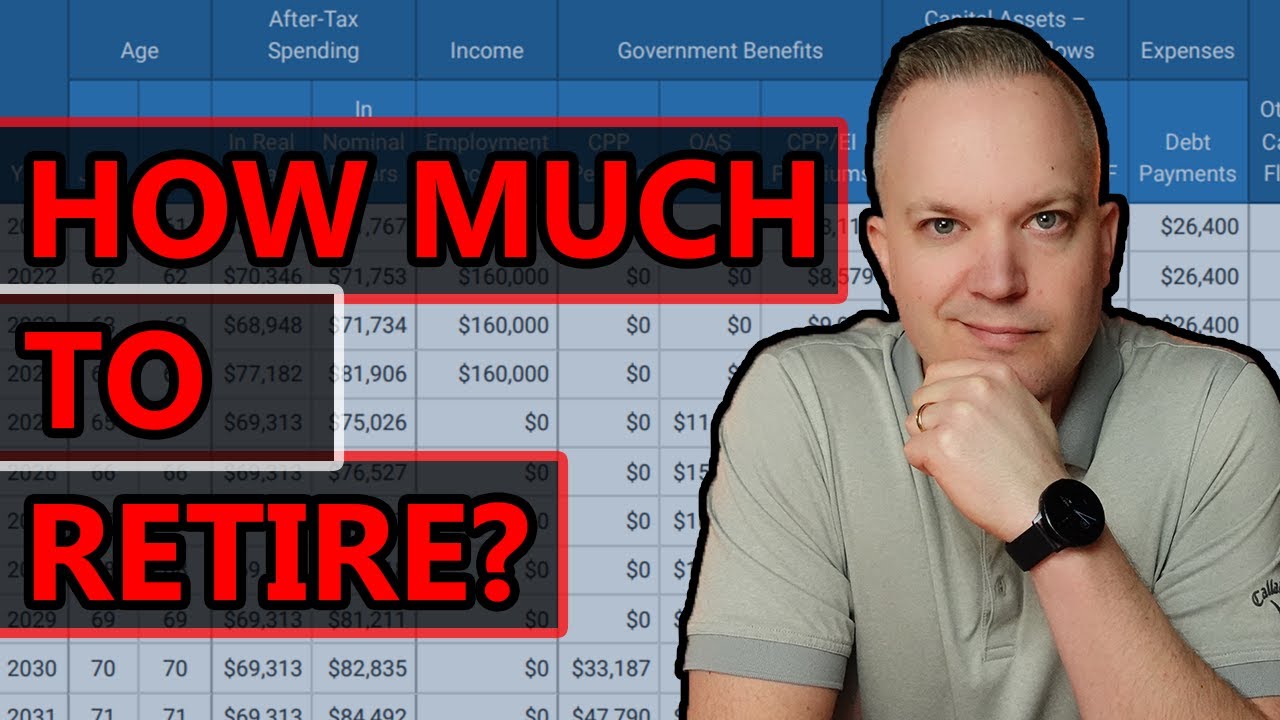

How Much Do You Need to Retire in Canada? It Might Be Less Than You Think
Retirement planning can often seem like a daunting task, filled with complex calculations and sometimes unrealistic expectations. Many Canadians wonder how much they need to retire comfortably, thinking they must accumulate vast sums to maintain their desired lifestyle. However, recent analyses and insights suggest that the amount needed for a comfortable retirement might be less than you think.
Understanding Retirement Costs in Canada
Before you can determine how much you’ll need to retire, it’s essential to understand what retirement costs generally include. For most Canadians, these costs can be categorized into several key areas:
- Living Expenses: This includes housing (mortgage or rent), utilities, groceries, transportation, and healthcare costs.
- Leisure Activities: Many retirees wish to travel, pursue hobbies, or indulge in activities they did not have time for while working.
- Healthcare: While Canada boasts a publicly funded healthcare system, it doesn’t cover all expenses. Many retirees will need supplemental insurance and will pay out-of-pocket for certain health services.
The “Replacement Ratio”
A commonly used guideline for retirement savings is the "replacement ratio," which suggests that retirees need approximately 70-80% of their pre-retirement income to maintain their standard of living. For many, this seems like a daunting figure, leading them to pursue aggressive savings plans. However, this figure may not be as high as it appears for several reasons:
-
Declining Expenses: As individuals retire, their expenses often decrease. For example, they may no longer be contributing to their savings plans or respond to the hustle of daily commuting costs.
-
No More Work-Related Expenses: With the cessation of work comes the elimination of several costs associated with employment, such as work attire and eating out during lunch hours.
- Government Benefits: The Canada Pension Plan (CPP) and Old Age Security (OAS) provide a steady income stream for seniors. Payments can total around $1,200 per month from CPP and approximately $615 per month from OAS, depending on your contribution history and retirement age.
Analyzing the Numbers
So, how much really is enough? According to various financial institutions’ studies, many Canadian retirees can live comfortably on as little as 50-60% of their pre-retirement income, thanks to the factors previously mentioned.
For example, if you were earning a pre-retirement income of CAD 70,000 a year, this suggests a retirement budget of CAD 35,000 to CAD 42,000 annually. In terms of savings, if you want to be financially secure, accumulating between CAD 300,000 and CAD 500,000 in retirement savings could be sufficient, depending on your lifestyle choices, debt levels, and other factors.
Tailoring Your retirement plan
Understanding how much is needed for retirement is not a one-size-fits-all equation. It is crucial for potential retirees to evaluate their particular circumstances, preferences, and lifestyle goals. Factors to consider include:
-
Desired Lifestyle: Different lifestyles come with different costs. Individuals who plan to travel extensively may require a larger retirement fund compared to those who prefer a quieter, more subdued existence.
-
Location: The cost of living varies significantly across Canada. Urban centers like Toronto and Vancouver have higher living expenses than rural areas, requiring a strategic approach when calculating retirement funds.
- Health Considerations: As people age, healthcare needs often increase. It is prudent to factor in potential medical expenses, which can be substantial in later years.
Final Thoughts
Retirement in Canada can be far less financially burdensome than many anticipate. With smart planning, an understanding of personal needs, and leveraging government benefits, potential retirees can create a comfortable retirement lifestyle without feeling the pressure to amass a fortune.
Ultimately, the key to achieving a happy and secure retirement lies in thoughtful preparation, realistic budgeting, and adaptability to changing circumstances. By approaching retirement with the right mindset and a solid plan, Canadians might just discover that they need less than they originally thought to lead a fulfilling life in their golden years.
LEARN MORE ABOUT: Retirement Pension Plans
REVEALED: Best Investment During Inflation
HOW TO INVEST IN GOLD: Gold IRA Investing
HOW TO INVEST IN SILVER: Silver IRA Investing




Hi Adam, if your beneficiaries will need to pay taxes before recieving money from your estate, does it make sense to take out life insurance to cover the cost of those taxes. Thank you. I am so grateful for your videos. I have learned so much.
TAX free saving account/ number one thing to invest in!!
4% rule is a great rough estimate. It does take into consideration inflation. Great if you do not have software and relatively close
Oh boy. My bank sucks!
Looks good but inflation…. when we finally need the money in 20 30 or 40 years…. ya pretty sure a million might be just enough
Just need little clarification on 3 % retrun, 3% of 274,139 = 8224.17 /12 = 685.34/month
Thank you so much Adam ❤
hi r u on Podcast?. thx
Awesome Adam
if you got 2M with a house that you own, can you retire at 30?
Great video, awesome topic. Thank you.
$40,000 a year in Canada, in the province of BC, is simply inconceivable. Living in the country is getting far too expensive.
How can I speak to a registered licensed financial planner who can review our situation and advise when we can retire
In 2023, even tho' at a low risk investment fund, we are losing money. And the cost of everything keeps going up.
I have been doing taxes for years and do all our monthly/yearly budgets. So I am not naive about the costs of living. We are both retired, do not travel & pay our bills on time so no interest. It is getting exhausting. Who can we trust to direct us in the right direction as we age. We live in Calgary, AB
Retirees who struggle to meet their basic needs are the ones who could not accumulate enough money during their active years to meet their needs. Retirement choices determine a lot of things. My parents both spent same number of years in the civil service, but my mom was investing through a wealth manager, and my dad through the 401k. My mom retired with about 4.2 million, but my dad retired with roughly 1.8 million.