
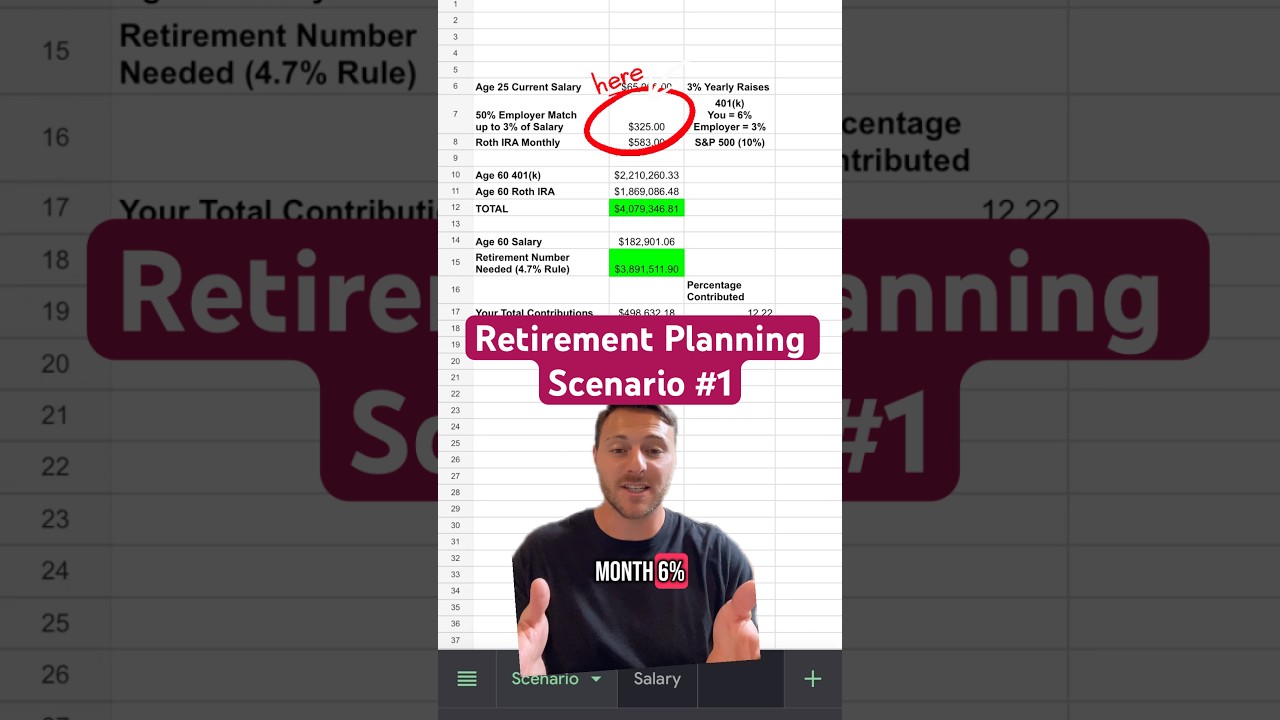

Let’s Walk Through a Basic retirement planning Scenario: Building Your Future Brick by Brick
retirement planning. The words can evoke a mix of emotions – excitement about future freedom and perhaps a little anxiety about financial security. It can seem daunting, but breaking it down into manageable steps can make the process feel less overwhelming. Let’s walk through a basic retirement planning scenario to understand the fundamental principles and get you started on the right track.
The Scenario: Meet Sarah, the Diligent Saver
Sarah is 30 years old, currently earning $60,000 per year. She’s just starting to think seriously about retirement and wants to understand how much she needs to save. Here’s what we’ll assume about Sarah:
- Retirement Age: 65 (35 years until retirement)
- Desired Retirement Income: 80% of her current income, or $48,000 per year. (This is a common rule of thumb, aiming to replace the income needed for living expenses.)
- Life Expectancy: 90 years (25 years in retirement)
- Current Retirement Savings: $10,000
Step 1: Estimate Your Retirement Needs
This is crucial. We’ve already estimated Sarah’s desired annual retirement income at $48,000. However, we need to factor in inflation and Social Security benefits.
- Inflation: Let’s assume an average inflation rate of 2.5% per year. This means $48,000 in today’s dollars will be worth significantly less in 35 years. We need to calculate the future value of $48,000.
- Social Security: This is a more complex calculation, but we can use online estimators provided by the Social Security Administration (SSA). For simplicity, let’s assume Sarah estimates she’ll receive $18,000 per year in Social Security benefits at age 65.
Therefore, Sarah needs to generate $48,000 (desired income) – $18,000 (Social Security) = $30,000 per year from her savings, adjusted for inflation.
Step 2: Calculate the Required Retirement Nest Egg
Now, we need to determine how much money Sarah needs to have saved by age 65 to generate that $30,000 annual income (adjusted for inflation) for 25 years. This is where the power of compounding and investment returns comes in.
- Safe Withdrawal Rate: A common guideline is the 4% rule, which suggests withdrawing 4% of your retirement savings each year to avoid running out of money.
- Nest Egg Calculation: To generate $30,000 per year at a 4% withdrawal rate, Sarah needs $30,000 / 0.04 = $750,000 in today’s dollars.
Important Considerations: This is a simplified calculation. It doesn’t account for potential healthcare costs, unexpected expenses, or adjustments to the withdrawal rate based on market performance.
Step 3: Determine Required Savings and Investment Strategy
Now, we need to figure out how much Sarah needs to save each year to reach her goal of $750,000 (adjusted for inflation) in 35 years, considering her starting savings of $10,000. This requires understanding the power of compound interest and selecting an appropriate investment strategy.
- Investment Return: Let’s assume Sarah invests in a diversified portfolio with an average annual return of 7%. This is a moderate return, achievable through a mix of stocks and bonds.
- Savings Calculation: Using a retirement calculator or spreadsheet, we can determine that Sarah needs to save approximately $550 per month (or $6,600 per year) to reach her goal of $750,000 (in today’s dollars) in 35 years, assuming a 7% annual return.
Step 4: Adjust and Adapt
retirement planning isn’t a one-time event; it’s an ongoing process. Sarah needs to regularly review her plan and make adjustments as needed based on:
- Salary Increases: As Sarah’s income increases, she should aim to increase her savings rate.
- Market Performance: Investment returns can fluctuate, impacting her overall savings.
- Life Changes: Marriage, children, or unexpected expenses can all affect her financial situation.
Key Takeaways and Actionable Steps:
- Start Early: The sooner you start saving, the more time your money has to grow through compound interest.
- Estimate Your Needs: Determine your desired retirement income and factor in inflation and Social Security benefits.
- Set Realistic Goals: Don’t be afraid to adjust your goals as your circumstances change.
- Choose the Right Investments: Diversify your portfolio to manage risk and maximize returns.
- Seek Professional Advice: Consider consulting with a financial advisor for personalized guidance.
This scenario provides a basic framework for retirement planning. It’s important to remember that everyone’s situation is unique. Consult with a qualified financial professional to develop a personalized retirement plan that meets your specific needs and goals. Take control of your future – start planning today!
Disclaimer: This article is for informational purposes only and does not constitute financial advice. Consult with a qualified financial advisor before making any investment decisions.
LEARN MORE ABOUT: IRA Accounts
TRANSFER IRA TO GOLD: Gold IRA Account
TRANSFER IRA TO SILVER: Silver IRA Account
REVEALED: Best Gold Backed IRA




0 Comments