
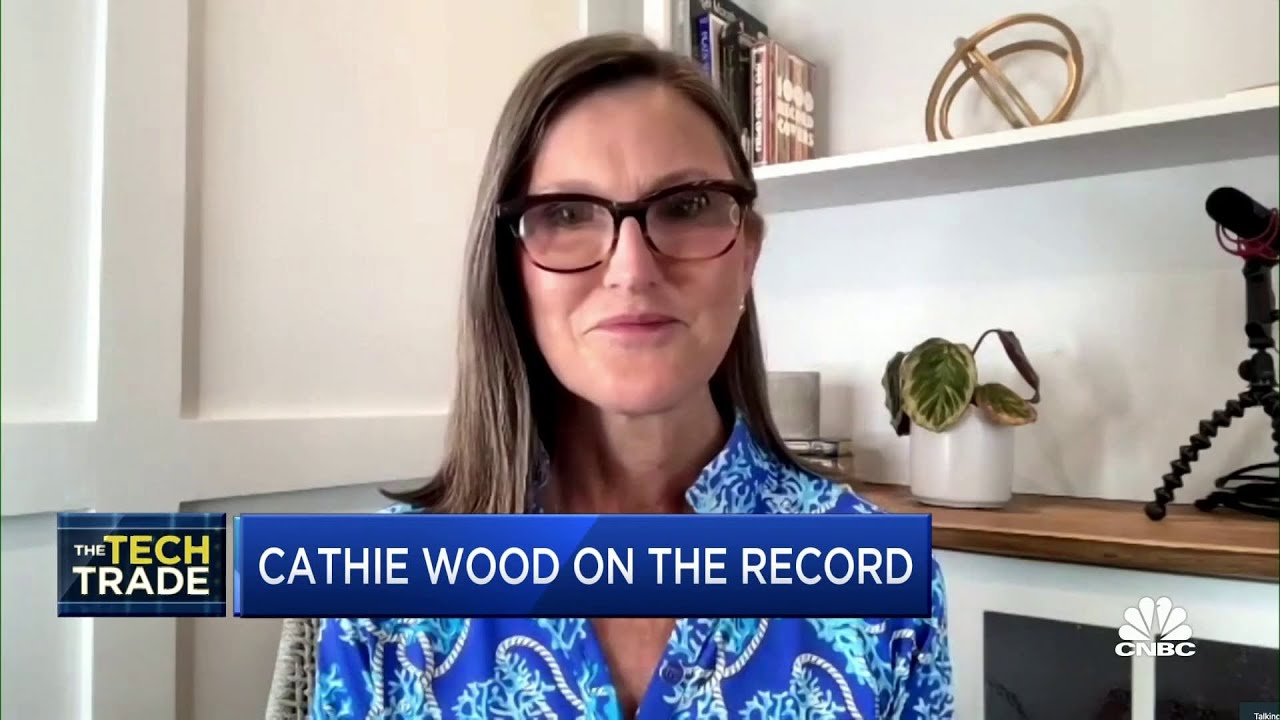

Cathie Wood: Insights on the Current Inventory-Led Recession
Cathie Wood, the CEO and founder of ARK Investment Management, has garnered significant attention in the investment world for her bold predictions and innovative approach to technology-driven investing. With a keen eye for disruptive trends, Wood has often positioned herself at the forefront of market shifts. Recently, she has voiced her belief that the global economy is experiencing an inventory-led recession, a viewpoint that raises critical questions about the state of the markets and the broader economic landscape.
Understanding Inventory-Led Recession
To grasp Wood’s assertion, it’s important to delve into what constitutes an inventory-led recession. An inventory-led recession occurs when businesses overproduce goods or stockpile inventory in anticipation of future demand. However, if that demand does not materialize as expected, companies are left with excess inventory, leading to cuts in production, layoffs, and ultimately, a slowdown in economic growth. This lag in response can create a cycle of economic stagnation, as consumers and businesses alike pull back on spending, further exacerbating the issue.
The Current Economic Landscape
As of late 2023, the global economy has been navigating turbulent waters characterized by high inflation, rising interest rates, and geopolitical uncertainties. Many industries, particularly in retail and manufacturing, have reported surpluses of unsold goods. Estimates suggest that businesses are grappling with an extraordinary amount of unsold inventory, indicating a mismatch between production levels and consumer demand. This overhang can significantly dampen economic growth prospects.
Wood argues that such fundamentals point to an inventory-led recession, and her position is supported by various economic indicators. For example, the ratio of inventory to sales has been climbing, suggesting that inventory levels are outpacing sales. Companies are likely to respond by slashing production and potentially halting future capital expenditures, which would further slow economic activity.
Implications for Investment Strategies
From an investment standpoint, Wood’s insights carry weight. As a firm advocate for disruptive innovation, she has consistently argued that investors should recalibrate their strategies in response to changing economic conditions. In an environment marked by an inventory-led recession, sectors that are quick to adapt and leverage technology stand to gain a competitive advantage.
Wood highlights that companies engaged in automation, supply chain optimization, and e-commerce will be better positioned to navigate through economic headwinds. For instance, firms that utilize data analytics to forecast demand accurately and optimize inventory levels may mitigate the adverse effects of an inventory surplus. Additionally, businesses focused on sustainable practices and efficiency can capitalize on shifting consumer preferences toward responsible consumption, which may drive growth even amid economic challenges.
The Role of Innovation
What sets Wood apart is her unwavering belief in the power of innovation. She argues that while the current economic climate poses challenges, it simultaneously creates opportunities for groundbreaking companies. By investing in sectors such as biotechnology, artificial intelligence, and renewable energy, Wood maintains that investors can find resilience and growth potential.
Furthermore, her focus on long-term investment horizons suggests that the market may experience volatility in the short term but ultimately recovers as businesses adjust their operations and consumer behavior stabilizes. Wood encourages investors to seek out firms that are not only weathering the storm of an inventory-led recession but are also primed to emerge stronger through innovation and adaptability.
Conclusion
As the global economy navigates the complexities of an inventory-led recession, Cathie Wood’s insights underscore the importance of understanding macroeconomic trends and their implications for investment. By recognizing the shifting landscape and investing in innovative companies that can adapt, investors may find opportunities even in seemingly challenging times.
Wood’s perspective serves as a reminder that while economic downturns can be daunting, they often pave the way for transformative change and new growth avenues. In a world where uncertainty is the only constant, an innovative approach can be the key to not just surviving, but thriving.
LEARN ABOUT: Investing During Inflation
REVEALED: Best Investment During Inflation
HOW TO INVEST IN GOLD: Gold IRA Investing
HOW TO INVEST IN SILVER: Silver IRA Investing



Possibly the worst stock picker of all time
Cathie Wood. Nauman such smooth at yap by such smooth with careful life against no at world god work at without critical!
I want to invest in the crypto market I need a reliable broker that will help me trade my coin and make profits Any recommendations?