
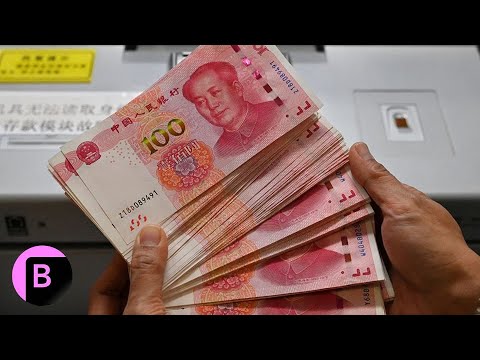

China Capitulates as Dollar Keeps Rising: Markets in 3 Minutes
Introduction
In recent weeks, the global financial landscape has been dramatically influenced by the ongoing strength of the U.S. dollar, raising concerns regarding China’s economic position. As the dollar continues to soar, China’s strategy appears to pivot towards capitulation, raising questions about the future trajectory of its economy and the implications for global markets.
The Dollar’s Dominance
The U.S. dollar has been gaining strength against a basket of currencies, primarily fueled by a robust U.S. economy, rising interest rates, and geopolitical tensions that have led investors to seek safe-haven assets. As the Federal Reserve maintains a hawkish stance, the dollar index has surged, marking its highest levels in years. This upward trend has significant implications for global trade, particularly for economies heavily reliant on exports.
China’s Economic Dilemma
For China, the rising dollar spells trouble. The Chinese yuan has depreciated against the dollar, complicating the country’s efforts to stabilize its economy, which has been recovering from the aftermath of stringent COVID-19 measures. As the currency weakens, the cost of imports rises, exacerbating inflationary pressures while diminishing the competitiveness of Chinese exports in international markets.
In response to these challenges, Chinese policymakers have begun to signal a potential shift towards more accommodative monetary policies. Reports suggest that the People’s Bank of China is considering loosening its grip on interest rates to counteract the economic slowdown. Such a move, however, carries risks, potentially leading to capital flight as investors favor higher yields in the U.S. over China’s comparatively lower returns.
Capitulation and its Consequences
The term "capitulation" denotes a surrender or yielding to an overwhelming force, and in this context, it seems China is edging towards a difficult realization—that it may need to recalibrate its economic strategies in light of the dollar’s persistent strength. As China seeks to support its economy amidst a weakening yuan, this capitulation could have far-reaching effects.
Firstly, a lower yuan might initially provide a temporary boost to exports by making Chinese goods cheaper for foreign buyers. However, if the currency continues to plummet, it could trigger a loss of confidence among international investors, leading to increased capital outflows and further depreciation—a vicious cycle that would undermine economic stability.
Secondly, the implications extend beyond China. As the world’s second-largest economy struggles, global supply chains could be disrupted, impacting economies dependent on Chinese manufacturing. This could ultimately hinder global recovery efforts, especially in regions still grappling with post-pandemic challenges.
Conclusion
As the dollar continues to rise, China appears to be at a crossroads. Faced with the pressures of a strengthening U.S. currency and the accompanying economic ramifications, Chinese policymakers may need to rethink their approach. The path forward will require delicate balancing—stabilizing the yuan while fostering domestic growth in an increasingly competitive global market. The unfolding situation will be critical to watch, as it not only affects China but also sends ripples through the entire international financial system. Investors and analysts alike are advised to remain vigilant, as the economic landscape could shift profoundly in the coming months.
LEARN ABOUT: Investing During Inflation
REVEALED: Best Investment During Inflation
HOW TO INVEST IN GOLD: Gold IRA Investing
HOW TO INVEST IN SILVER: Silver IRA Investing




asia gotta go
If China really capitulate Xi would have gone to trump inauguration…