
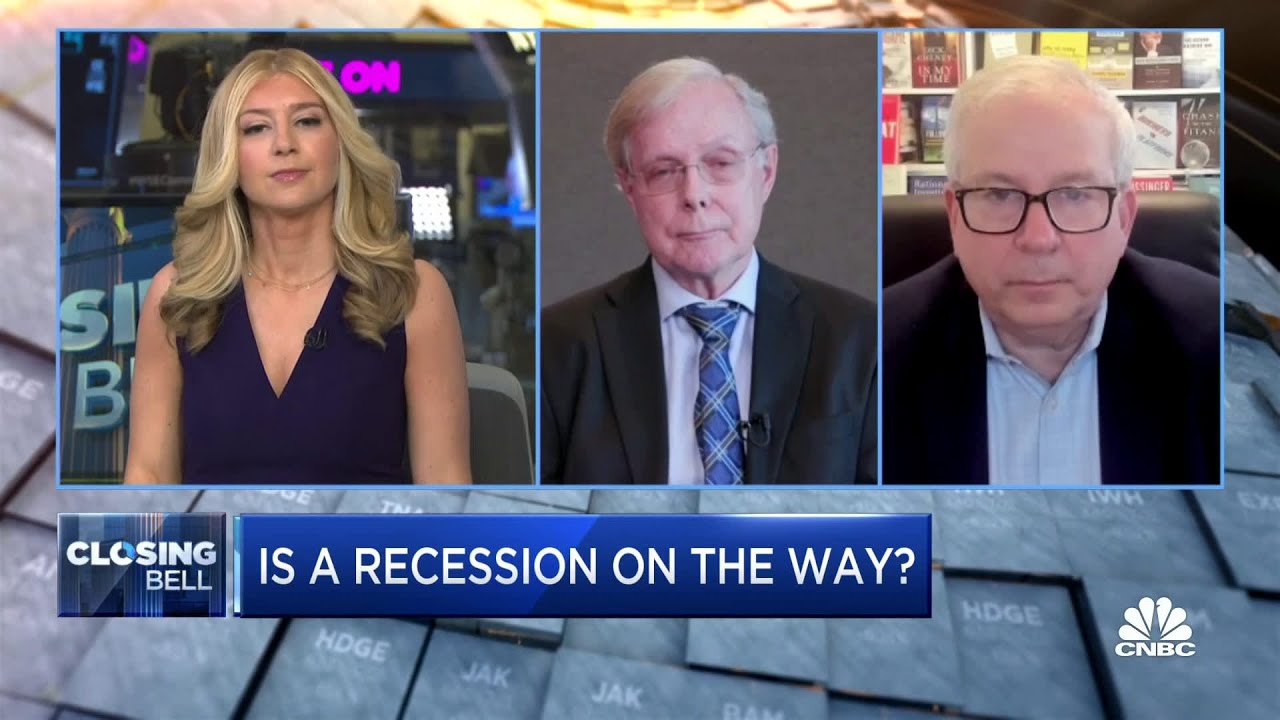

Title: Analyzing the Economic Landscape: David Rosenberg Suggests the Recession May Have Already Begun
In the ever-shifting terrain of the global economy, the specter of recession looms large, raising questions among investors, policymakers, and everyday consumers alike. Renowned economist David Rosenberg, the chief economist and strategist at Rosenberg Research, has recently voiced his concerns, suggesting that signs point to the possibility that a recession may already be underway. His insights invite reflection on the underlying economic conditions and their implications for various sectors.
Understanding Recession Indicators
A recession is typically defined as two consecutive quarters of negative economic growth, characterized by a decline in GDP, rising unemployment rates, and decreasing consumer spending. While the technical definition provides a framework, the realities of economic cycles are often more complex. Economists utilize various indicators to gauge economic health, including consumer confidence, industrial production, and manufacturing activity.
David Rosenberg argues that an examination of these indicators suggests troubling trends. For instance, recent data has shown decreasing consumer spending and a significant pullback in retail sales, which are critical indicators of economic vitality. As consumers curb their expenditures—often the result of inflationary pressures and rising interest rates—the potential for a broader economic downturn increases.
Inflation and Interest Rates: A Double-Edged Sword
One of the core factors contributing to the precarious economic environment is inflation, which has surged to levels not seen in decades. Central banks, including the Federal Reserve, have responded by raising interest rates in an effort to cool down the economy and tame rising prices. While these measures may be necessary to stabilize inflation, they can also hamper economic growth by making borrowing more expensive, thus discouraging consumer spending and business investment.
Rosenberg emphasizes that the cumulative effects of higher interest rates can create a ripple effect across various sectors, particularly housing and durable goods. As mortgage rates climb, housing affordability diminishes, leading to a slowdown in the housing market. Additionally, businesses may hesitate to invest in expansion or new projects in an uncertain interest rate environment, contributing to an overall economic slowdown.
Labor Market Dynamics
While many economists point to a robust job market as a sign of economic strength, Rosenberg urges caution. Despite low unemployment rates, he notes that many signs suggest a labor market that may be cooling. Layoffs in certain sectors, particularly technology and retail, and the slowdown in job creation could signal that employers are bracing for tougher economic conditions.
Moreover, labor market dynamics are influenced by various factors, including shifts in consumer demand and productivity levels. As companies adjust to changing circumstances, the potential for rising unemployment could exacerbate the challenges faced by an economy already under duress.
The Role of Geopolitical Factors
In addition to domestic economic challenges, Rosenberg highlights the influence of geopolitical factors on the global economy. Tensions arising from international conflicts, trade disputes, and supply chain disruptions add another layer of complexity. These uncertainties can lead to volatility in markets and exacerbate inflationary pressures, further straining economic conditions.
Looking Ahead: Preparing for Uncertainty
As the economic landscape evolves, the question remains—what does the future hold? For investors and consumers, the key is to remain informed and adaptable. Rosenberg suggests that understanding economic indicators and being aware of market trends can help individuals and businesses navigate potential downturns.
Policymakers also play a crucial role in shaping the economic environment. Balancing inflation control with measures that sustain economic growth is a delicate dance, and Rosenberg’s insights may serve as a timely reminder of the challenges ahead.
Conclusion
David Rosenberg’s assertion that a recession may have already begun resonates with many current economic indicators. While debate continues among economists about the precise state of the economy, his insights encourage a thorough examination of the factors influencing our financial landscape. As uncertainty looms, remaining vigilant and flexible in response to economic shifts will be essential for individuals and businesses alike in the months to come.
LEARN ABOUT: Investing During Inflation
REVEALED: Best Investment During Inflation
HOW TO INVEST IN GOLD: Gold IRA Investing
HOW TO INVEST IN SILVER: Silver IRA Investing




Recession is definitely going to happen
It’s coming no doubt there’s going to be recession don’t forget to say thanks sleepy dementia Joe
No fear Of recession.
This aged well.
Unemployment has always been under reported. It's more like 30% rather than the paltry 3.5%. That figure has not been updated in years.
Guy never learns (David)
Recession is phony. I'm bullish
David Rosenberg was on point here! Thank you correcting the host for spreading a false narrative.
Biden has turned the US into USSR
The consumer cannot hold up
This recession is making 2008 look tame . Recession heading to depression. Gas all time highs, dollar value depleted and housing market a rate hike or two from popping. America crumbling before our eyes, but hey at least no mean tweets or offensive words.
Watching this today after the market tumbled 1200 pts started by the weak earnings from Walmart then target…..David is correct!
The train left the station.
And there’s a bright light heading towards us.
Have a nice day.
Company's can cut jobs and pivot in a heartbeat. Stop paying attention to the job market its a lagging indicator.
Do the opposite what the fed does.
We voted for Biden. What else did we expect?