
[ad_2]
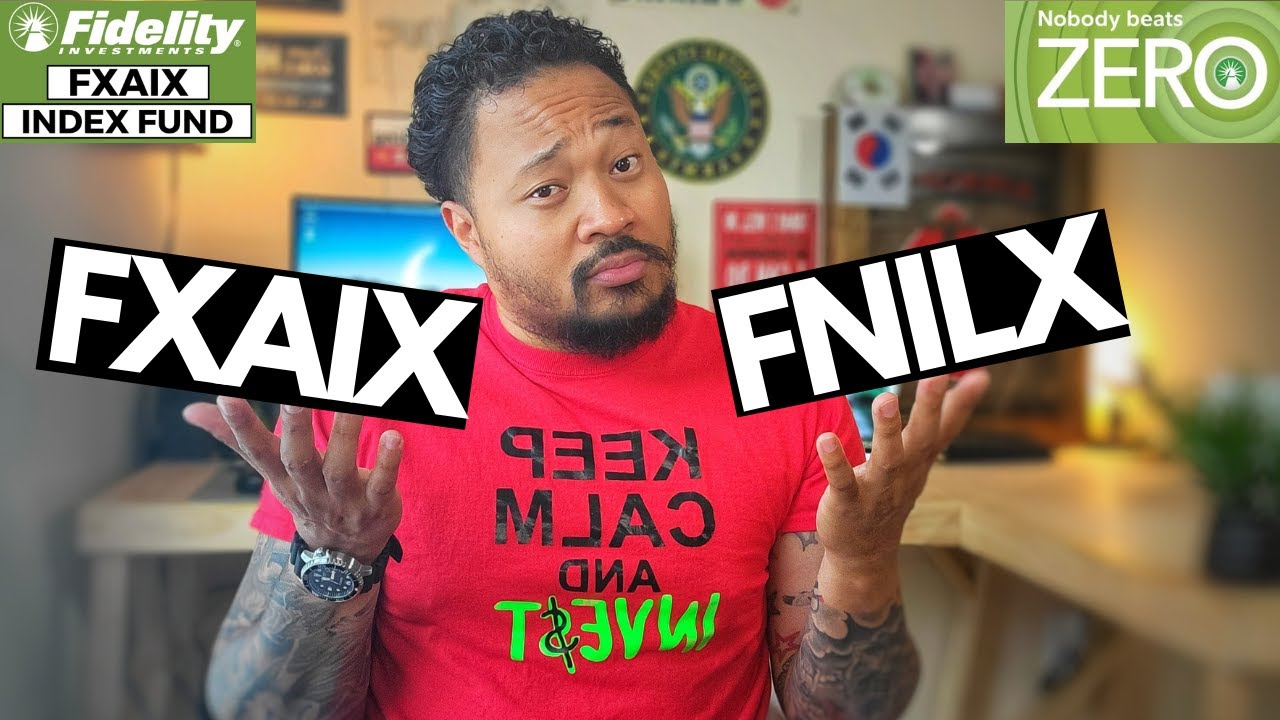
Fidelity 500 FXAIX vs. FNILX: Which is Better for You?
When it comes to investing in index funds, Fidelity offers two attractive options: the Fidelity 500 Index Fund (FXAIX) and the Fidelity Zero Large Cap Index Fund (FNILX). Each fund has its benefits and drawbacks, and the better choice depends on your individual investment goals and circumstances. In this article, we will compare FXAIX and FNILX to help you determine which fund might be right for you.
Overview of FXAIX and FNILX
Fidelity 500 Index Fund (FXAIX):
- Objective: Tracks the performance of the S&P 500 Index, which consists of 500 of the largest U.S. companies.
- Expense Ratio: 0.015%, making it one of the most cost-effective options available.
- Minimum Investment: Requires a minimum investment of $0.
- Dividends: Distributes dividends quarterly, which are typically reinvested unless specified otherwise.
Fidelity Zero Large Cap Index Fund (FNILX):
- Objective: Also aims to track a large-cap index similar to the S&P 500, though it has some differences in its composition.
- Expense Ratio: 0.00%. This fund has no expense ratio, meaning that all your invested money is working for you without any fees.
- Minimum Investment: Requires a minimum investment of $0.
- Dividends: Like FXAIX, FNILX also distributes dividends quarterly.
Key Comparisons
1. Cost
Cost is a crucial factor when choosing an index fund, especially for long-term investors. Here, FNILX has a significant advantage with its 0.00% expense ratio. Every dollar saved on fees can compound over time, potentially leading to greater returns.
2. Performance
While both funds aim to track large-cap U.S. equities, FXAIX tracks the S&P 500 directly. Therefore, it may provide more consistent performance relative to a well-known benchmark. FNILX, while designed to have similar performance characteristics, may have slight deviations due to its unique indexing methodology.
3. Dividends
Both funds pay dividends quarterly. However, because FNILX has no expense ratio, any dividends earned are not subject to fund fees, effectively increasing your potential earnings compared to FXAIX, which has a minimal fee.
4. Tax Efficiency
Both FXAIX and FNILX are generally tax-efficient due to their index-fund structure. However, because FXAIX may have a slight expense ratio, there could be a small impact on after-tax returns compared to FNILX.
Which Fund is Better?
Choosing between FXAIX and FNILX primarily depends on your investment philosophy and needs.
-
Choose FXAIX if:
- You want a fund that closely tracks the performance of the S&P 500 with high reliability.
- You value dividends and want a fund with a well-established history.
- Choose FNILX if:
- You’re looking for a zero-expense ratio fund to maximize your returns.
- You prefer a simple, no-cost option that still aims to capture large-cap U.S. equity returns.
Conclusion
Ultimately, both FXAIX and FNILX can be strong components of a diversified portfolio, but the choice boils down to your individual preferences and investment strategy. If fees are your primary concern, FNILX could be the more attractive option. However, if you prefer a fund that’s closely aligned with the S&P 500 with a proven track record, FXAIX is likely a better fit. Always consider your financial goals, risk tolerance, and investment horizon when making your decision. Happy investing!
LEARN MORE ABOUT: IRA Accounts
CONVERT IRA TO GOLD: Gold IRA Account
CONVERT IRA TO SILVER: Silver IRA Account
REVEALED: Best Gold Backed IRA



What are your thoughts on Fidelity's zero funds? Don't forget to like and subscribe.
Great video really like your content
Brother please explain. Why FXAIX 190$ per share, while FNILX is 19$ per share. Im super confused
Fidelity Zero funds all pay out dividends only once a year in December, where there fee base ones are pay out quarterly. Are they making money on the dividends since they only pay the lump sum once a year?
Probably FXAIX is better because it gives out dividend 4 times a year instead of annually through FNILX. Assuming a yield of 2-3% for s&p500 going forward, because the dividends are given out earlier, you are basically investing at ~100% force (or you can think of it as FNILX withholding your dividend making you ~98% invested at all time only). Such difference is a bigger factor than the delta of 0.015% expense ratio. So FXAIX should win out in the long run?
Like that South Korean flag in the background Tray, I’m also a fellow Blasian.
Fnilx
Bring back the videos sir!! You are missed !!
You forget the most important part. FNILX is annual dividend distribution while FXAIX is quarterly.
FNILX
Something is missing here. Fidelity has to make money out of the situation. They're not doing things out of the goodness of their heart. How many different companies does each account have in it specifically? How often are the dividends paid out? There's just no way both accounts are equal on all fronts infidelity is just giving you a way better deal by zero fee.
I encourage investors to look at the dividends paid by these funds. They are not the same and the more expensive fund may be cheaper when taking this into account.
Good video. I do FXAIX in my IRA and FNILX in my taxable account long term. Ill let you know in thirty years which was better 😉
I have both but in separate accounts. Do I only need one?
Hello, do you guys recommend just picking one to invest to in the long run ? And if so why? TIA
I’ve started with fidelity i actually like there plat form
Why make index funds so similar? Its like choosing a classic 88 car or a newer car i guess sort of?
It seems like FNILX has a lower dividend yield right now than FXAIX. Wouldn't it be more advantageous to invest in FXAIX and reinvest the dividends? The difference in dividend yield would more than make up for the slightly higher expense ratio.
What about turnover rate? FNILX has 5%, FXAIX has 2%.
Always look at yield % and capital gains when comparing index funds.
Thanks to all the Vets! Sorry about your mom Bro. From a Marine. Godspeed. Sorry I am late but now catching up with your videos!
My question is more why Fidelity has to issue virtually same index fund but different expense ratio? whats the reason and logic behind it??
FXAIX or FSKAX for a roth with about 20 years until retirement?