
[ad_2]
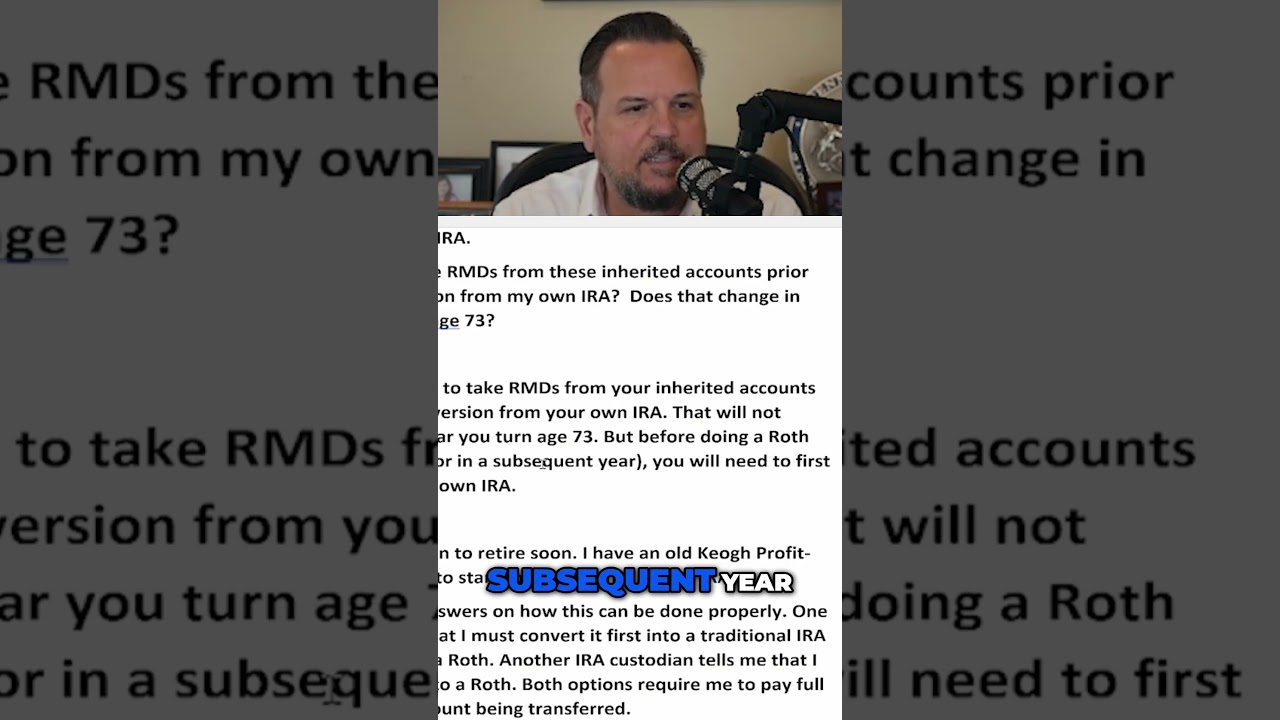
Inherited IRA & Roth Conversion: Navigating RMD Timing
Inheriting an IRA or Roth IRA can be a blessing, but it also comes with complexities, especially when considering Roth conversions and Required Minimum Distributions (RMDs). Understanding the timing of RMDs in conjunction with potential Roth conversions is crucial for maximizing the benefits of your inherited account and avoiding potential penalties. This article will break down the key considerations.
Understanding Inherited IRA Rules
Before diving into RMD timing and Roth conversions, let’s recap the basics of inherited IRA rules. Depending on the deceased’s relationship to you and the date of death, different rules apply.
- Spouse Beneficiary: A surviving spouse has the most flexibility. They can treat the inherited IRA as their own, rolling it into their own IRA, or keep it as an inherited IRA subject to the rules for non-spouse beneficiaries.
- Non-Spouse Beneficiary: For non-spouse beneficiaries, the rules generally fall into three categories, determined by the date of death:
- Pre-2020: The "Stretch IRA" rule allowed beneficiaries to take distributions over their own life expectancy.
- 2020-2023: The SECURE Act eliminated the Stretch IRA for most non-spouse beneficiaries, requiring the inherited IRA to be fully distributed within 10 years after the death. Certain "Eligible Designated Beneficiaries" (EDB), such as surviving spouses, minor children, disabled individuals, or chronically ill individuals, could still use the life expectancy method.
- Post-2023: SECURE Act 2.0 clarified and further tweaked the rules. The 10-year rule remains, but annual RMDs are required during the 10-year period if the deceased was already taking RMDs.
Roth Conversions: A Powerful Tool for Inherited IRAs
A Roth conversion involves transferring funds from a traditional IRA (including an inherited one) to a Roth IRA. The amount converted is taxed as ordinary income in the year of the conversion.
Why Convert an Inherited IRA to a Roth IRA?
- Tax-Free Growth and Withdrawals: Roth IRAs offer tax-free growth and withdrawals in retirement (or after the 10-year distribution period, if applicable).
- Potential for Lower Future Tax Rates: If you anticipate being in a higher tax bracket in the future, paying taxes on the conversion now might be beneficial.
- Estate Planning: Roth IRAs can be a valuable asset for estate planning, as distributions to beneficiaries are generally tax-free.
The Crucial Connection: RMD Timing and Roth Conversions
Here’s where the timing gets critical:
- You must take your RMD before converting any funds from the inherited traditional IRA to a Roth IRA. The RMD amount cannot be converted.
- Conversion amounts are taxed as ordinary income. Be mindful of how the conversion might affect your current tax bracket and consider strategies to minimize the tax impact.
Example Scenario:
Let’s say you inherited a traditional IRA subject to the 10-year rule and you are not an EDB. The IRA is worth $100,000. This is your first year with the inherited IRA, and the deceased was already taking RMDs. You have to take your RMD, which is, say, $4,000. You then decide to convert $20,000 to a Roth IRA.
- You must first take the $4,000 RMD.
- You can then convert up to $20,000.
- The $20,000 converted amount will be added to your taxable income for the year.
- You have nine years remaining to distribute the remaining $76,000 in the inherited IRA (subject to potential further growth).
Strategies for Managing RMDs and Roth Conversions
- Consult a Financial Advisor: Given the complexity of these rules, seeking professional advice is highly recommended. A financial advisor can help you develop a personalized strategy.
- Spread Conversions Over Multiple Years: Converting smaller amounts over several years can help manage the tax impact.
- Consider Your Tax Bracket: Carefully analyze your current and projected tax bracket to determine the optimal conversion amount.
- Understand the 10-Year Rule (If Applicable): If subject to the 10-year rule, plan your conversions and distributions strategically to avoid a large tax bill in the final year.
- Keep Accurate Records: Maintain detailed records of all distributions and conversions for tax reporting purposes.
- Don’t Forget State Taxes: Remember to factor in any state income taxes that may apply to the conversion.
Common Mistakes to Avoid
- Failing to Take the RMD: This is a costly mistake, as the penalty for failing to take an RMD is significant.
- Converting the RMD Amount: Only funds above and beyond the RMD can be converted.
- Underestimating the Tax Impact: Be realistic about the tax implications of the conversion.
- Ignoring the 10-Year Rule (If Applicable): Procrastination can lead to a large, unexpected tax bill.
Conclusion
Inheriting an IRA presents both opportunities and challenges. Carefully navigating the RMD rules and understanding the potential benefits of Roth conversions is essential for maximizing the value of the inherited account and minimizing your tax burden. By consulting with a financial advisor and developing a well-thought-out plan, you can make informed decisions that align with your financial goals. Remember that the rules surrounding inherited IRAs can be complex and are subject to change, so staying informed is key.
LEARN MORE ABOUT: IRA Accounts
TRANSFER IRA TO GOLD: Gold IRA Account
TRANSFER IRA TO SILVER: Silver IRA Account
REVEALED: Best Gold Backed IRA



0 Comments