
[ad_2]
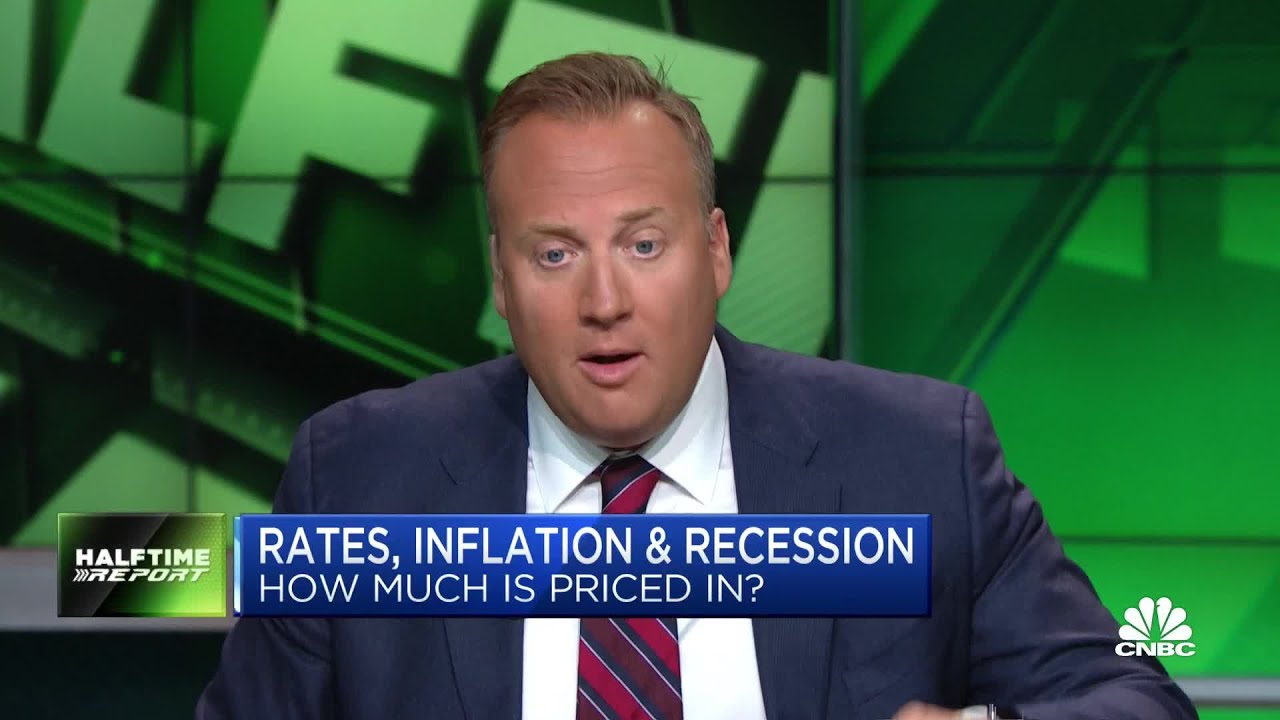
Josh Brown: The Fed Has Led Us Into a Technical Recession
In the ever-evolving landscape of economics, few entities wield as much influence as the Federal Reserve (the Fed). These decisions can lead to significant ripple effects in the economy, much like a stone tossed into a tranquil pond. As financial markets fluctuate and citizens increasingly voice their concerns about economic stability, one prominent voice has emerged to highlight a critical perspective: Josh Brown, a respected financial commentator and CEO of the Ritholtz Wealth Management.
Understanding the Technical Recession
A technical recession is typically defined as two consecutive quarters of negative economic growth, as measured by a country’s gross domestic product (GDP). While the term might sound clinical, the implications of a technical recession can be far-reaching, affecting everything from employment rates to consumer confidence. In interpreting recent economic indicators, Brown posits that the Fed’s actions have engineered a situation where the economy is teetering on the brink of such a recession.
The Role of the Federal Reserve
The Federal Reserve, as the central bank of the United States, has a dual mandate: to promote maximum employment and stabilize prices. In pursuit of these goals, the Fed has often turned to monetary policy tools, chiefly the manipulation of interest rates and other forms of quantitative easing. During economic expansions, the Fed has a tendency to raise interest rates to combat inflation, while in downturns, it lowers rates to stimulate borrowing and spending.
Brown asserts that the Fed’s recent policy decisions, particularly those related to interest rates, have sown the seeds of this technical recession. He argues that the aggressive interest rate hikes aimed at curbing inflation have created an environment of tightening credit, which in turn constrains consumer spending and business investment—two fundamental pillars of economic growth.
The Consequences of Aggressive Rate Hikes
Following the Fed’s post-pandemic response, markets witnessed a rapid increase in interest rates. While these hikes were initially positioned as necessary to combat soaring inflation, they inadvertently stifled growth. Businesses began to face higher borrowing costs, leading to reduced capital expenditures and hiring freezes. Consumers, meanwhile, confronted rising mortgage rates and credit card interest, beginning to curtail spending patterns that had driven economic growth.
Brown emphasizes that while inflation remains a concern, the Fed’s actions have not only failed to stabilize the economy but have also pushed it into a precarious situation. The evidence—declining GDP figures and diminished consumer confidence—points to a broader economic contraction that could be classified as a technical recession.
A Cautionary Perspective
The implications of Brown’s argument extend beyond economic jargon. A technical recession can lead to job losses, decreased household income, and a significant reduction in consumer spending—a cycle that can be challenging to reverse. He insists that policymakers should be cautious not to overlook these realities while focusing on inflation control alone.
Moreover, there is an ongoing debate among economists about whether the risks of recession are being adequately communicated to the public. Brown highlights the importance of transparency and clear communication from the Fed regarding the challenges ahead, allowing businesses and consumers to better navigate the changing economic landscape.
Looking Ahead
With the possibility of a technical recession looming, the call for a more balanced approach to monetary policy is crucial. Brown advocates for a careful reassessment of interest rate policies that considers not just inflation, but also the broader implications for economic growth and stability.
As the economic landscape continues to shift and evolve, the insights of commentators like Josh Brown serve as a reminder that effective economic management requires a delicate balance. Whether the Fed can recalibrate its strategies in time to avert a technical recession remains to be seen, but one thing is certain: vigilance and careful dialogue will be imperative in navigating the unpredictable waters of the economy.
In conclusion, as we look towards the future, understanding the intricate relationship between monetary policy and economic growth will be essential for managing potential downturns and ensuring a stable financial environment. Josh Brown’s observations serve as a clarion call for attention to the complex economic forces at play, urging both policymakers and the public to prepare for the challenges that lie ahead.
BREAKING: Recession News
REVEALED: Best Investment During Inflation
HOW TO INVEST IN GOLD: Gold IRA Investing

Jopllibad winner libing canada 2024
The only people who benefited from the pandemic were the stock buy backs and asset inflator. Low interest loans and quantitative easing might be the real problem. But we stupid.
Sounds like a preacher.
Josh Brown is an absolute legend.
President Biden economic advisors stated that gas prices have come down a average of 35 dollars a month plus 3.5 million new jobs. Right, stores can`t find people to work, Shelves are half filled and service is non existance. It`s going to get worse so buckle up for at least 18- 24 months
Melissa, please don't ever interrupt Downtown Josh Brown again…. thank you in advance.
If you don't rid of shadow banks and zombie corps it will come right back
Josh's arrogant tone makes it impossible to hear anythng he has to say.
What a dumb and coward comment the Feds are now at fault? Biden's administration went to war with the national oil producers and drove the price of oil up and with that everything else followed. Do not blame the Feds the Feds were forced to raise in order to cover up for inflation if anything they took too long to do it because of politics. Have the courage to say the truth Biden's administration fight with the energy industry created this mess and is the main cause not the Feds. The only thing the Feds failed to do was move up because they were too accommodating because of political pressure. When you talk about economy you got to have the courage to kick politics out of the conversation, have conviction and do your job well.
Those that dont agree ask your self is it because im in the stock market or ur in the market stop of thinks dad about the better life. The life you all part of has split but i will abando those that most people would agree to crash but i believe they can change equal i see all let me worry i will always protect what i created
Bitcoin blockchain and much more can see who i am no can don't yet
I just find it hard to take this guy josh serious.
$
you get what you voted for
Interesting stuff.
Omg who can tolerate to listen to that high pitch voice