
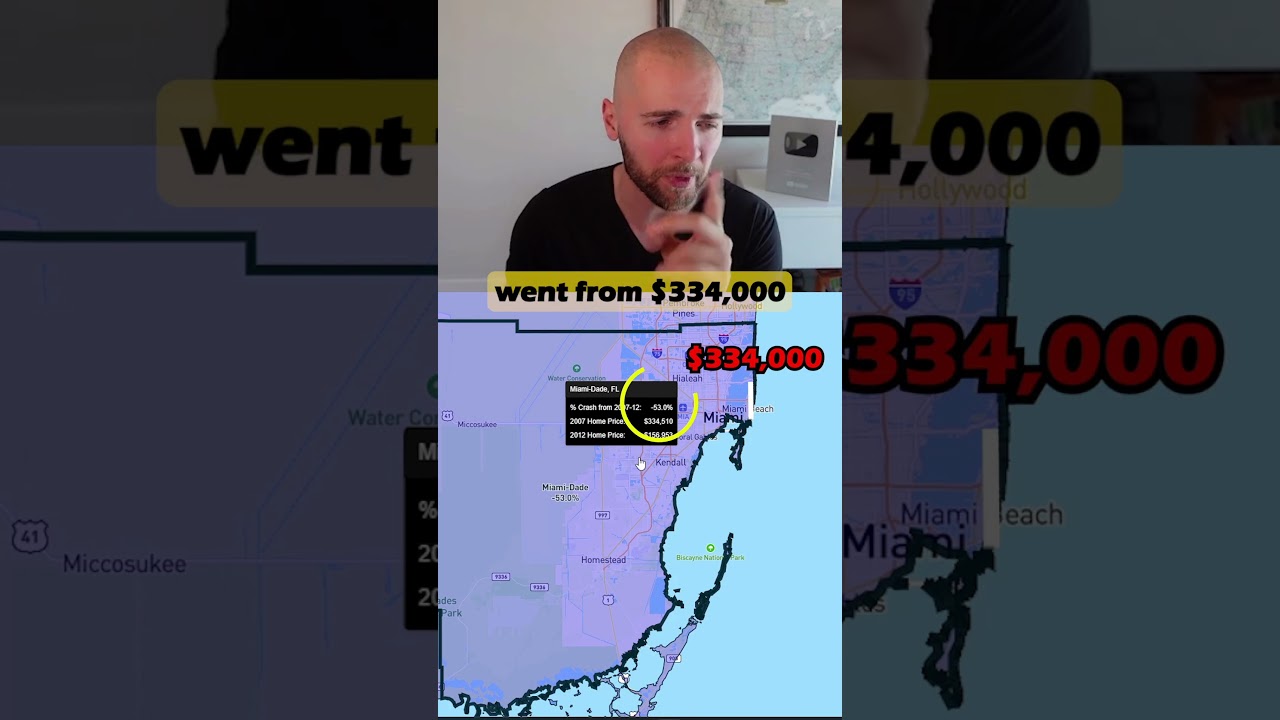

Is Miami’s Housing Market About to Crash? A Deep Dive into the Sun-Kissed Boom
Miami, Florida, has been synonymous with a red-hot housing market for the past few years. Fueled by an influx of out-of-state buyers, low interest rates, and a perceived tax advantage, prices skyrocketed, luxury condos sprouted like palm trees, and bidding wars became the norm. But the sunshine state’s real estate party might be nearing its end. Whispers of a looming crash are growing louder, and while opinions differ on the severity, most experts agree that a significant correction is likely on the horizon.
The Perfect Storm of Factors:
Several factors are converging to create a potential turning point for Miami’s housing market:
- Rising Interest Rates: The Federal Reserve’s aggressive interest rate hikes to combat inflation have made mortgages significantly more expensive. This increased cost of borrowing is directly impacting affordability, pricing many potential buyers out of the market.
- Inventory Increase: After years of record-low inventory, the supply of homes for sale is steadily increasing. As new construction projects reach completion and homeowners look to capitalize on peak prices, competition is heating up, putting downward pressure on prices.
- Economic Uncertainty: The broader economic landscape is riddled with uncertainty. Fears of a recession, combined with layoffs in the tech and finance sectors (industries that fueled Miami’s recent boom), are causing potential buyers to reconsider large investments.
- Overvaluation Concerns: Many argue that Miami’s housing market has become significantly overvalued. The rapid price appreciation of the past few years has outpaced wage growth, making it unsustainable in the long run.
- “Florida Man” Factor Fading?: The mass migration from states like New York and California that powered the boom is showing signs of slowing down. As the initial excitement of a new lifestyle fades and costs of living rise, some are questioning whether Miami is the paradise they envisioned.
Signs of a Slowdown:
While a full-blown crash is not a certainty, several indicators point to a cooling market:
- Slowing Price Growth: Price appreciation has decelerated significantly. While prices may not be plummeting, the days of double-digit annual growth are likely over.
- Increased Days on Market: Homes are staying on the market longer, giving buyers more leverage in negotiations.
- Price Reductions: Sellers are increasingly being forced to reduce their asking prices to attract buyers.
- Cooling Rental Market: The rental market, which often mirrors the housing market, is also showing signs of softening.
Will it be a Crash or a Correction?
The key question is whether these factors will lead to a gradual correction or a dramatic crash. A correction typically involves a moderate decline in prices, followed by a period of stabilization. A crash, on the other hand, is characterized by a rapid and significant drop in values, often triggered by a specific event or crisis.
Experts are divided:
- Those predicting a correction: Argue that the underlying fundamentals of the Miami market remain strong. They point to the city’s continued appeal as a desirable place to live, its thriving business environment, and its relatively low tax rates. They believe that the market will simply cool down and return to a more sustainable pace of growth.
- Those predicting a crash: Emphasize the overvaluation of the market and the potential for a significant economic downturn. They argue that a recession could trigger a wave of foreclosures and force sellers to drastically reduce prices, leading to a sharp decline in values.
What Should Buyers and Sellers Do?
Navigating the Miami housing market in this environment requires caution and informed decision-making:
- Buyers: Be patient and do your due diligence. Don’t be afraid to negotiate and wait for prices to stabilize. Focus on long-term value and affordability.
- Sellers: Be realistic about pricing and be prepared to adjust your expectations. Consider making improvements to your property to enhance its appeal. Work with an experienced real estate agent who understands the current market dynamics.
Conclusion:
The future of Miami’s housing market remains uncertain. While a catastrophic crash is not guaranteed, the factors contributing to a potential correction are undeniable. Whether it’s a gentle landing or a more turbulent descent, it’s clear that the days of runaway price growth are likely behind us. Understanding the market dynamics and making informed decisions is crucial for both buyers and sellers navigating this evolving landscape. The sun may still be shining on Miami, but a storm might be brewing in its housing market.
LEARN MORE ABOUT: Investing During Inflation
REVEALED: Best Investment During Inflation
HOW TO INVEST IN GOLD: Gold IRA Investing
HOW TO INVEST IN SILVER: Silver IRA Investing



Night life too expensive
Tax
Insurance
To hot
I don’t see it I am a broker 40 years plus again seeing the multitude of people seeing a house in homestead fighting for a house prices will surge more if the interest is down
He's wrong! There is only a shortage of AFFORDABLE homes
you can't get no info on your website unless you give your credit card…people would be more inclined to use something if they can give it a try. basically can't do one thing to test it out