
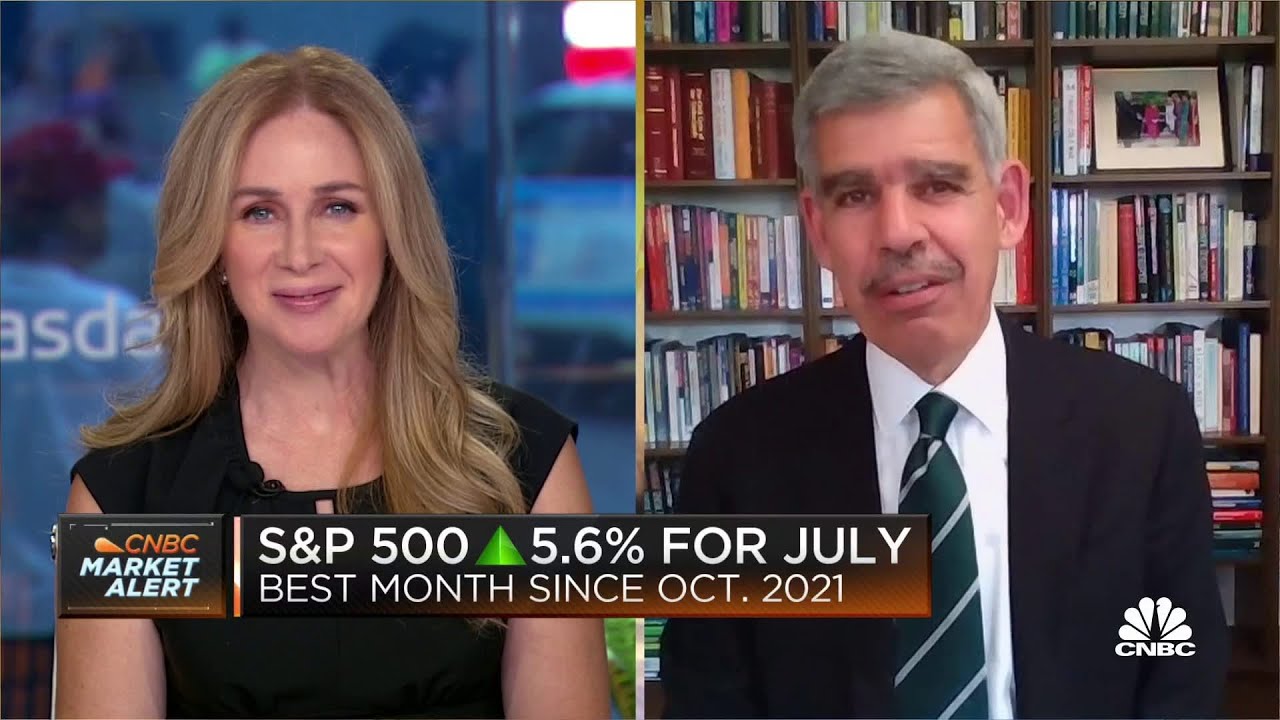

Title: Mohamed El-Erian: Signs Indicate a Rapid Slowdown in the Global Economy
In recent weeks, global economic indicators have raised alarms among economists, analysts, and investors alike. Mohamed El-Erian, the renowned economist and chief economic advisor at Allianz, has become a prominent voice in discussing these unsettling trends. As someone closely attuned to the rhythms of global finance, El-Erian’s insights offer a vital perspective on the current state of the economy and the potential challenges ahead.
Context of Economic Slowdown
The global economy has faced an array of challenges in recent years, from the lingering effects of the COVID-19 pandemic to geopolitical tensions and inflationary pressures. The pandemic induced unprecedented disruptions across supply chains, labor markets, and consumer behavior, creating a complex economic landscape. As countries began to emerge from lockdowns, expectations of a robust recovery emerged. However, as El-Erian points out, the reality may be unfolding differently.
Identifying the Signs
El-Erian highlights several key indicators that suggest a significant deceleration in economic growth. One prominent signal is the contraction in key economic data, including GDP forecasts for major economies. Central banks’ policies are also being scrutinized, particularly as they navigate the delicate balance between controlling inflation and fostering growth. Recent decisions by the Federal Reserve, European Central Bank, and Bank of England to either raise interest rates or signal the possibility of hikes are having ripple effects that slow down economic activity.
Additionally, consumer sentiment has taken a hit. Rising prices for essential goods have eroded purchasing power, leading to decreased consumer spending – a crucial driver of economic growth. In several markets, there are signs that businesses are becoming more cautious, shelving investment plans amid fears of a recession. The slowdown in manufacturing and service sectors further amplifies concerns, with purchasing managers’ indices in various regions indicating contracting activity.
The Role of Geopolitics
El-Erian emphasizes that geopolitical tensions are also exacerbating the economic situation. The ongoing conflict in Ukraine, tensions between the United States and China, and instability in the Middle East contribute to uncertainty in global markets. Supply chain disruptions, energy price volatility, and inflationary pressures stemming from these geopolitical risks are hurdles that many economies are struggling to surmount.
Potential Consequences
The ramifications of a rapidly slowing global economy are manifold. El-Erian warns that if current trends continue, we may face a landscape characterized by stagnant growth and persistently high inflation – a scenario often referred to as ‘stagflation.’ This synthesis of stagnation and inflation presents unique challenges for policymakers, making it difficult to implement effective monetary and fiscal measures.
A Call for Vigilance
El-Erian’s observations serve as a clarion call for leaders in finance and policy. He underscores the importance of a coordinated and responsive approach to both monetary policy and fiscal measures to mitigate the impact of a global economic slowdown. Investment in infrastructure, green technology, and workforce development can serve as a cushion against the winds of recession, fostering long-term economic resilience.
In conclusion, as Mohamed El-Erian articulates, the signs of a rapidly slowing global economy are becoming increasingly hard to ignore. For businesses, policymakers, and individuals, understanding these dynamics is essential for navigating the uncertain waters ahead. Caution, adaptability, and proactive measures will be key to steering through this complex economic landscape, ensuring resilience in the face of potential challenges that lie ahead.
BREAKING: Recession News
REVEALED: Best Investment During Inflation
HOW TO INVEST IN GOLD: Gold IRA Investing


Joe is so rude. Mohammed is predicting recession.
Joe you r incorrect, Mohamed said stocks will recover in V shape ahead of the real economy
What, the professionals think that this is news to us?
This lunatic is was calling for multiple points on the rates just few weeks ago …. now he is saying inflation is done ? or actually he did say inflation is still with us? The global slow down is designed by central banks to reduce inflation like El-erian asked for … it takes time … Trillion dollar economy and monetary policy dont turn a dime like the brain of Mohammad. on the one hand he is saying fed is slow to react and now he is saying fed is reacting too much ….
WOW joe is trying to trap mohamed …. watch this going forward … 4:20 … joe is stupid and devious
Stocks is being underrated, with a lot of people going into AMC and Tesla stocks neglecting the existence of penny stocks which would results in less congestion and high value demand of penny stocks in the near future.
Mohammad like to be Paul is just the luckiest man who says nothing and looks so important to bunch of idiots.
This guy never says anything definite, only air and gets so much credit.
Why the foking public is so foking stupid.
Jerome Paul should get the Nobel prize for saving the world through the worst disastrous era, the Chinese created/spreaded virus.
ALEX EPSTEIN 's "Fossil Future" on sale now. The Moral Case for Fossil Fuels. HUMAN flourishing
She is a Biden sycophant.Gives administration softballs while people are hurting.
"we will probably go into a recession as inflation goes down". Wrong. We are already in a recession
I think in times like these, where market has been so down, it would be beneficial to hear more often from you, talking about the situation and such. I believe a lot of people are disappointed because the news coming from you were very optimistic, talking about BTC going to $100k few months ago, about us being in bull market, and when those predictions turned out to be wrong, you're gone. I've been watching you for a while and I can tell you're doing a lot of research. The 2.16M subscribers are your crew you should stay in touch more, That's why I will forever be in-depted to you Clara, you've changed my life, I'll continue to preach about your name for the world to hear, you've saved me from a huge financial debt with just little investment, Thanks Ms Clara Greens