
[ad_2]
Tech Investment in the Crosshairs: Oxford Economics Flags Recession Risk, While IMF Sees AI as a Growth Buffer
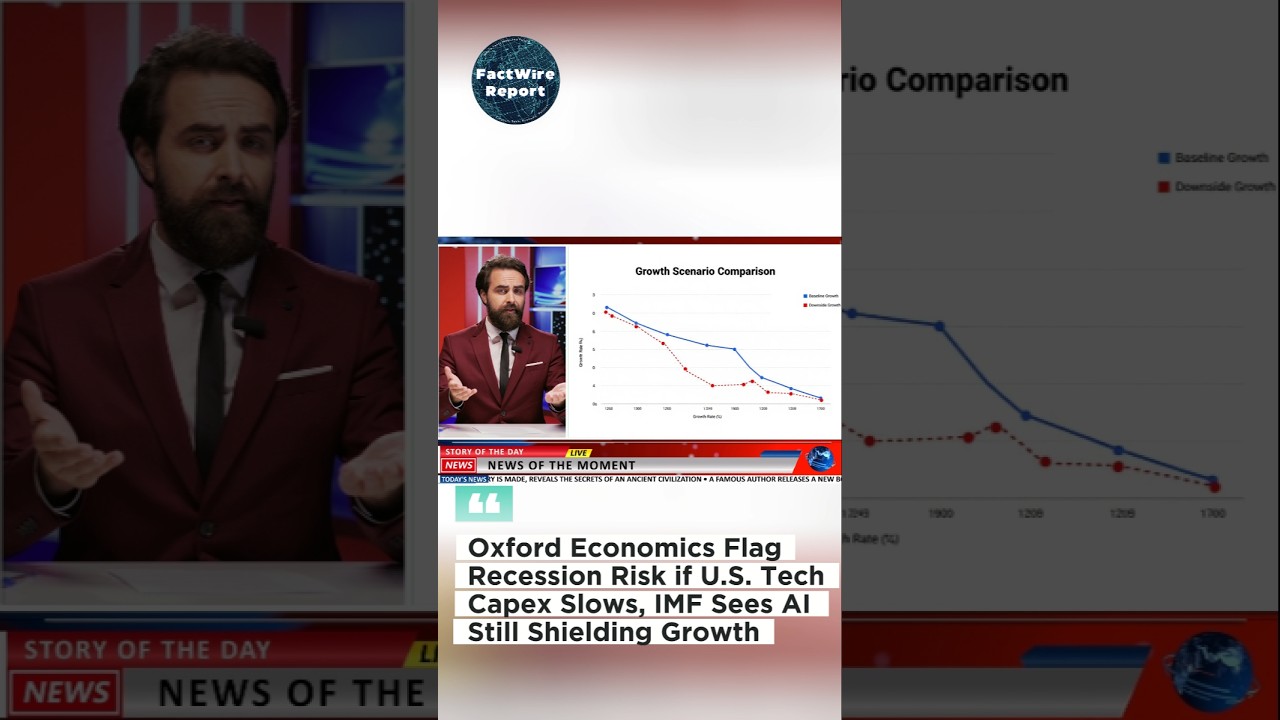
The U.S. economy is walking a tightrope, and the fate of its tech sector, particularly capital expenditure (capex), could determine whether it avoids a fall. Recent reports paint a complex picture, with Oxford Economics warning of recession risks tied to a potential slowdown in tech investment, while the International Monetary Fund (IMF) suggests artificial intelligence (AI) is still providing a shield against economic downturn.
Oxford Economics: Tech Capex Holds the Key to Avoiding Recession
A recent report from Oxford Economics is raising concerns about the fragility of the U.S. economy. The core message: a significant slowdown in technology capex could trigger a recession. After a period of robust growth fueled by digital transformation and infrastructure investments, particularly in cloud computing and data centers, the firm warns that the party might be ending.
Several factors contribute to this potential slowdown. Higher interest rates are making borrowing more expensive, impacting investment decisions. Supply chain bottlenecks, while easing, still pose challenges for acquiring essential hardware and equipment. Furthermore, the looming uncertainties surrounding the regulatory landscape, particularly concerning AI, are creating hesitancy among businesses looking to make long-term commitments.
“Tech capex has been a significant driver of economic growth in recent years,” explains [hypothetical Oxford Economics analyst]. “A pullback in this area, combined with existing inflationary pressures and geopolitical risks, could be the tipping point that pushes the U.S. into a recession.”
The report emphasizes the interconnectedness of the tech sector with the broader economy. A slowdown in tech investment would not only impact the companies directly involved but also ripple through their supply chains, affecting manufacturers, service providers, and ultimately, consumer spending.
IMF: AI Remains a Bulwark Against Economic Headwinds
While Oxford Economics expresses concern about the potential downside risks to tech investment, the IMF offers a more optimistic perspective, particularly regarding the role of AI in shielding the U.S. economy. The IMF’s latest World Economic Outlook suggests that AI is continuing to fuel productivity gains and innovation, potentially offsetting some of the negative effects of other economic challenges.
The IMF acknowledges the uncertainties surrounding AI’s long-term impact but highlights its potential to boost economic growth through automation, increased efficiency, and the development of new products and services. They point to the continued demand for AI-related infrastructure, software, and talent as evidence of its ongoing positive impact.
“AI is a game-changer with the potential to significantly reshape the global economy,” notes [hypothetical IMF economist]. “While there are risks to be managed, its current impact on productivity and innovation is a positive force, particularly in developed economies like the U.S.”
The Dichotomy: Risk vs. Opportunity
The divergent perspectives from Oxford Economics and the IMF highlight the complex dynamics at play in the U.S. economy. While the former emphasizes the potential downside risks associated with a slowdown in tech capex, the latter underscores the ongoing benefits of AI.
The reality likely lies somewhere in between. The U.S. economy is facing a confluence of challenges, including high inflation, rising interest rates, and geopolitical uncertainties. While AI is undoubtedly a powerful force for growth, its impact is not guaranteed to be sufficient to completely offset these challenges.
The Path Forward: Navigating Uncertainty and Fostering Innovation
Policymakers and businesses alike must navigate this uncertainty with caution and foresight. To mitigate the risk of a tech-driven recession, it is crucial to:
- Address inflationary pressures: Taming inflation is essential to create a more stable and predictable economic environment, encouraging investment.
- Provide clarity on AI regulation: A clear and consistent regulatory framework will reduce uncertainty and encourage innovation in the AI sector.
- Invest in infrastructure: Continued investment in digital infrastructure, including broadband and 5G, is crucial to support the growth of the tech sector.
- Promote skills development: Ensuring that the workforce has the skills necessary to participate in the AI-driven economy is essential to realizing its full potential.
The future of the U.S. economy hinges on its ability to balance the risks and opportunities presented by the tech sector. By addressing the challenges and fostering innovation, policymakers and businesses can pave the way for sustainable and inclusive growth. The coming months will be crucial in determining whether the U.S. can successfully navigate this complex landscape and avoid the recessionary pitfalls that Oxford Economics has highlighted.
LEARN MORE ABOUT: Investing During Inflation
REVEALED: Best Investment During Inflation
HOW TO INVEST IN GOLD: Gold IRA Investing
HOW TO INVEST IN SILVER: Silver IRA Investing

0 Comments