

Quantitative Easing (QE) Explained: Boosting the Economy When Interest Rates Hit Zero
Imagine your local store isn’t selling much. They try discounting everything, but it doesn’t work. People just aren’t spending. What can they do? This is similar to what happens when an economy struggles and a country’s central bank runs out of conventional options. Enter: Quantitative Easing (QE).
QE is a powerful, and somewhat controversial, tool used by central banks to stimulate a struggling economy, particularly when traditional methods like lowering interest rates are no longer effective. Think of it as a financial jumpstart for the entire country.
What’s the Usual Way to Boost an Economy?
Typically, central banks like the Federal Reserve in the US or the Bank of England use interest rates to influence economic activity.
- Lower interest rates: This makes borrowing cheaper for businesses and individuals. They’re more likely to take out loans to expand their businesses, buy homes, or make large purchases. This increased spending boosts the economy.
- Raise interest rates: This makes borrowing more expensive, slowing down spending and potentially curbing inflation.
But what happens when interest rates are already near zero? They can’t go much lower! This is where QE comes into play.
So, What Exactly Is Quantitative Easing?
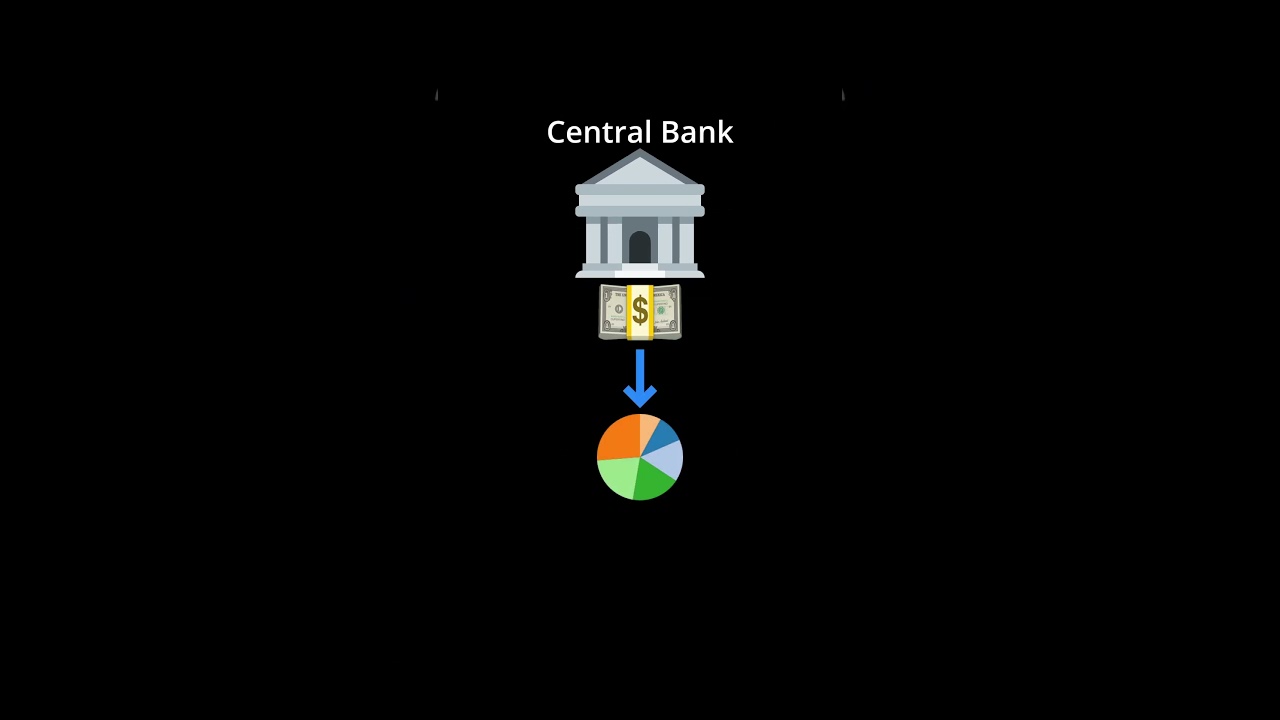
Quantitative easing is, in essence, a central bank injecting money directly into the economy by purchasing assets, typically government bonds and sometimes other assets like mortgage-backed securities, from commercial banks and other financial institutions.
Think of it like this:
- The central bank creates new electronic money (it doesn’t physically print it).
- It uses this newly created money to buy bonds from banks.
- This gives the banks more cash on hand.
How Does QE Stimulate the Economy?
By purchasing these assets, QE aims to achieve several key goals:
-
Lower Long-Term Interest Rates: Buying government bonds increases their price and lowers their yield (effectively the interest rate). This can encourage businesses and individuals to borrow and invest, as the cost of borrowing decreases across the board, not just at the short end.
-
Increase Liquidity: By giving banks more cash, QE improves their liquidity. They are then more likely to lend money to businesses and individuals.
-
Signal Commitment: QE signals to the market that the central bank is committed to supporting the economy, which can boost confidence and encourage investment.
-
Encourage Inflation (Sometimes): QE can potentially lead to higher inflation, which can be a desirable outcome if the economy is experiencing deflation (falling prices). A small amount of inflation is generally considered healthy for an economy.
What are the Risks of QE?
While QE can be a powerful tool, it’s not without its risks:
-
Inflation: Too much money chasing too few goods can lead to runaway inflation, eroding the value of savings and making goods and services more expensive.
-
Asset Bubbles: The increased liquidity can drive up the prices of assets like stocks and real estate, creating bubbles that can eventually burst.
-
Currency Devaluation: QE can weaken a country’s currency, making imports more expensive and potentially harming consumers.
-
Unintended Consequences: The long-term effects of QE are still being studied, and there’s always the risk of unforeseen consequences.
Examples of QE in Action:
QE has been used by various countries, including the United States, the United Kingdom, Japan, and the Eurozone. Notably, it was deployed extensively during and after the 2008 financial crisis and again during the COVID-19 pandemic.
In Conclusion:
Quantitative easing is a complex and controversial tool used by central banks to stimulate economies when traditional methods fail. It involves injecting money directly into the economy by purchasing assets. While it can be effective in boosting growth and preventing deflation, it also carries risks such as inflation and asset bubbles. Understanding QE is crucial for anyone wanting to grasp the complexities of modern finance and the measures taken to manage economic downturns. While it’s not a perfect solution, QE remains a key instrument in the central bank’s toolbox.
LEARN MORE ABOUT: Investing During Inflation
REVEALED: Best Investment During Inflation
HOW TO INVEST IN GOLD: Gold IRA Investing
HOW TO INVEST IN SILVER: Silver IRA Investing




After central bank buys from regular banks, does central bank now sell to citizens?
Does this mean that every time the central bank prints money, it actually means that's how much they have or more owed to them by other banks based on the bond amount?
Central Bank buys it from other central banks or just regular banks?