
[ad_2]
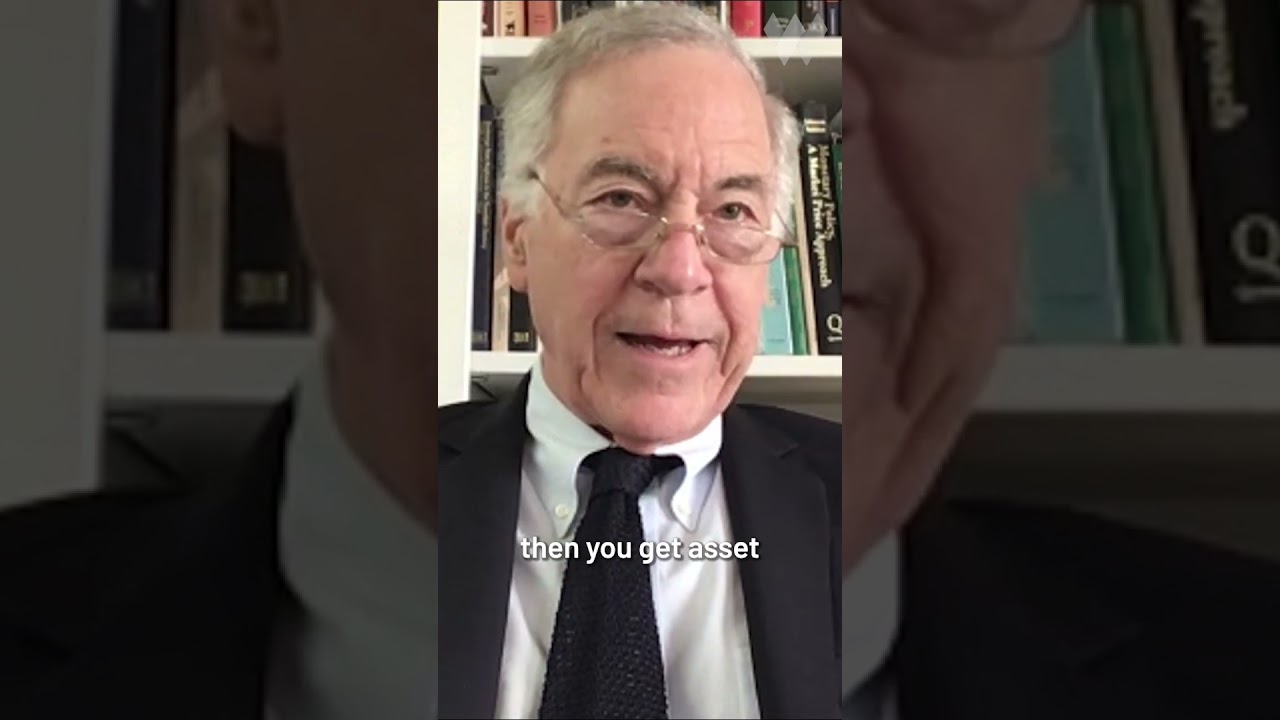
Steve Hanke’s Dire Warning: Inflation to Skyrocket! #investing #financialfreedom #economy
Professor Steve Hanke, a renowned economist and inflation expert at Johns Hopkins University, is sounding the alarm: prepare for a significant resurgence of inflation. His warnings, consistently shared on social media under hashtags like #investing, #financialfreedom, and #economy, are creating ripples of concern throughout the financial world. But what are his reasons, and what should investors and individuals do to prepare?
Hanke’s analysis centers on the crucial role of the money supply. He argues that excessive money printing by central banks, particularly during the COVID-19 pandemic, has laid the foundation for future inflationary pressures. While current inflation rates have seemingly cooled from their peak in 2022, Hanke believes this is merely a temporary lull before the storm.
The Money Supply Argument:
Hanke points to the significant increase in the broad money supply (M2) during the pandemic. M2 includes not only cash in circulation but also checking and savings accounts. He argues that this excess liquidity is still sloshing around in the financial system and, as it begins to circulate more actively, will inevitably drive up prices.
He often cites the quantity theory of money, a foundational economic principle stating that the general price level of goods and services in an economy is directly proportional to the amount of money in circulation. While the relationship isn’t always perfectly linear in the short term, Hanke believes the long-term correlation is undeniable.
Why the Current Calm Might Be Deceiving:
Many point to recent inflation reports showing a decline in the Consumer Price Index (CPI) and the Personal Consumption Expenditures (PCE) price index as evidence that inflation is being tamed. However, Hanke dismisses these metrics as lagging indicators that don’t accurately reflect the underlying monetary fundamentals. He argues that the current slowdown is primarily due to statistical base effects and temporary supply chain improvements.
What Can Investors and Individuals Do?
Hanke’s warnings necessitate a proactive approach to wealth preservation and financial planning. Here are some strategies investors and individuals can consider:
- Diversify your portfolio: Don’t put all your eggs in one basket. Spread your investments across different asset classes, including stocks, bonds, real estate, and commodities.
- Consider inflation-protected securities (TIPS): TIPS are designed to adjust their principal based on changes in the CPI, offering a hedge against inflation.
- Invest in real assets: Real estate, gold, and other commodities tend to hold their value during periods of high inflation.
- Pay down debt: High inflation often leads to higher interest rates, making debt more expensive to service. Reducing your debt burden can provide greater financial flexibility.
- Focus on value stocks: Companies with strong balance sheets and proven track records are often better positioned to weather economic downturns and inflationary pressures.
- Enhance your financial literacy: Understanding the forces that drive inflation and the various investment options available is crucial for making informed decisions.
The Controversy:
It’s important to note that Hanke’s views are not universally accepted. Many economists argue that factors beyond the money supply, such as supply chain disruptions and geopolitical events, are equally important drivers of inflation. They also contend that central banks have the tools to effectively manage inflation through interest rate hikes and other monetary policy measures.
Conclusion:
Whether or not Steve Hanke’s dire predictions come to pass remains to be seen. However, his warnings serve as a valuable reminder of the potential risks of unchecked inflation and the importance of proactive financial planning. By understanding the underlying economic principles and taking appropriate measures, investors and individuals can better prepare themselves for any future economic challenges. The key is to stay informed, remain vigilant, and diversify to mitigate potential risks and safeguard your financial future. #investing #financialfreedom #economy
LEARN MORE ABOUT: Investing During Inflation
REVEALED: Best Investment During Inflation
HOW TO INVEST IN GOLD: Gold IRA Investing
HOW TO INVEST IN SILVER: Silver IRA Investing

Were in the late 1970s style inflation. Housing stagnates. People strike. Wages slowly creep up to mitigate the loss if purchasing power.
back it with BTC problem solved
Money is a tool for goods exchange. The exchange rates of goods reflected its value. The most important rates for us, the commoners, is the salaries we got. When we helped move loads of bricks for a whole day to exchange for at least two meals and a roof to cover our heads became harder, it’s a time for extreme instability of the society. Even the few rich people that are standing high amongst the sea of people that are living in extreme poverty. No one could escape the bitterness. Everyone needs to be aware and work very very hard to go past this big storm.
Inflation?
Why not call it what it really is…a 20% Pay cut for everyone in the country, within the last 3 years.
The Federal Reserve's "target" devaluation of the dollar (inflation) is 2%.
The devaluation of the dollar is just beginning.
It will take years to inflate away the $40 trillion US debt.
This is a great time to borrow, if you buy appreciable assets.
Lowering the Prime Rate during inflation is pure politics.
When gas was $0.25 a gallon everyone laughed at me when I told them it would soon be $0.50 a gallon.
They didn't understand that the US had defaulted on it's foreign debts by taking us off the gold standard and then proceeded to devalue the dollar.
The current devaluation will have gas at $7.80/gallon within a few years,