
[ad_2]
Understanding Level 1 Expected Pension in NPS: A Beginner’s Guide
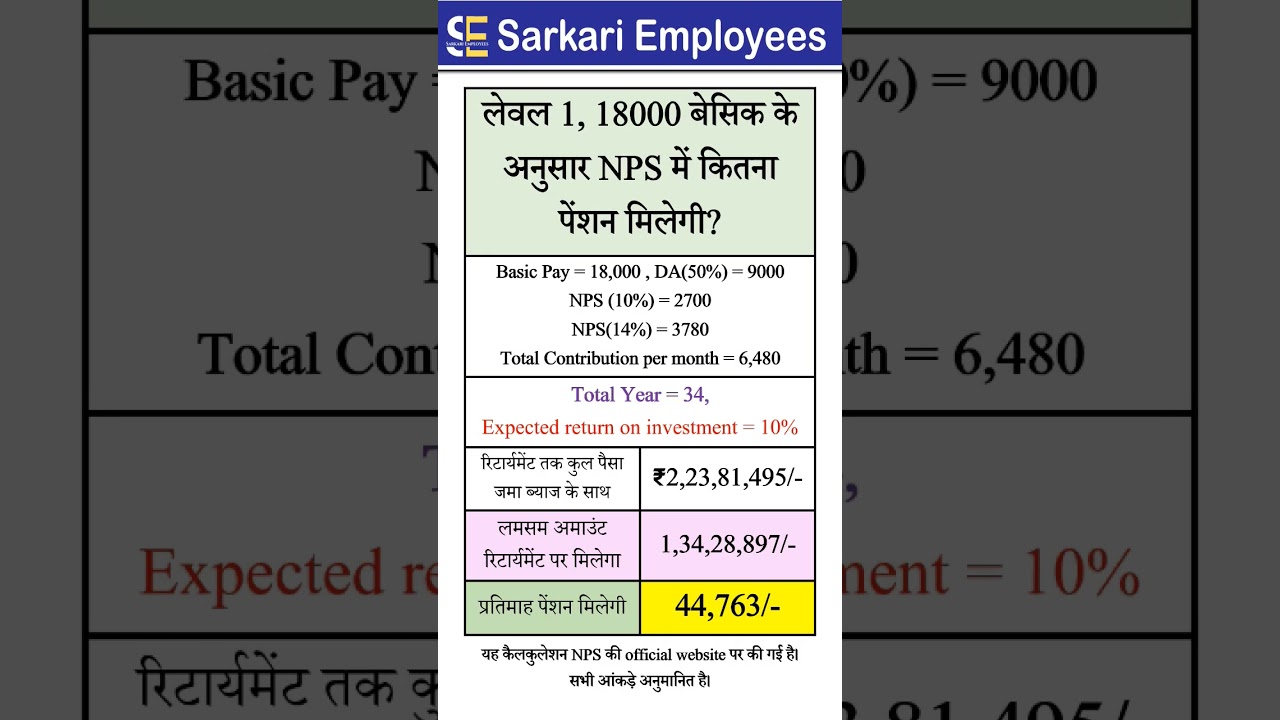
The National Pension System (NPS) is a government-backed, market-linked retirement savings scheme designed to provide citizens with a stable income stream after their working years. Understanding how much pension you can expect is crucial for effective retirement planning. This article focuses specifically on “Level 1” and sheds light on the factors influencing your potential pension in the NPS.
What is Level 1 in NPS?
In the context of pension estimation, “Level 1” generally refers to a basic, simplified calculation of your potential NPS pension. It’s an entry-level projection that provides a rough estimate based on a few key assumptions. Think of it as the starting point for your retirement planning journey.
While NPS offers various calculators and scenarios, a Level 1 calculation typically focuses on these primary elements:
- Your Contribution: How much you contribute to your NPS account regularly. This is the foundation of your pension corpus.
- Duration of Contribution: The number of years you plan to contribute to your NPS. A longer contribution period allows for greater compounding.
- Assumed Rate of Return: This is a crucial assumption. Since NPS investments are market-linked, the actual returns are subject to market fluctuations. Level 1 calculations usually use a hypothetical, average rate of return for simplicity.
- Annuity Rate: When you retire, a portion of your accumulated corpus is used to purchase an annuity, which provides a regular pension. The annuity rate, which is the percentage of your corpus paid out annually, depends on prevailing interest rates and the annuity plan you choose.
Why is Understanding Level 1 Important?
Despite being a simplified estimation, understanding Level 1 projections is beneficial for several reasons:
- Setting Realistic Expectations: It gives you a preliminary idea of the potential pension you can expect, allowing you to adjust your savings strategy if needed.
- Motivational Tool: Seeing the potential growth of your investments can motivate you to increase your contributions and stay invested for the long term.
- Foundation for Deeper Analysis: Level 1 calculations can serve as a starting point for more complex projections, considering various scenarios and risk tolerances.
- Understanding the Power of Compounding: It demonstrates how consistent contributions and time can significantly impact your retirement corpus.
Factors Affecting Your Actual Pension (Beyond Level 1):
While Level 1 provides a basic estimate, keep in mind that several factors can influence your actual pension:
- Market Performance: The biggest determinant of your NPS corpus is the performance of the underlying investments. Market fluctuations can significantly impact your returns.
- Investment Choices: NPS allows you to choose between different asset classes (equity, corporate bonds, government bonds). Your asset allocation strategy will influence your returns. Higher risk (more equity) potentially means higher returns, but also higher volatility.
- Expense Ratio: NPS has very low expense ratios, but these fees still impact your net returns.
- Annuity Options and Rates: The annuity plan you choose and the prevailing annuity rates at the time of retirement will determine the actual amount of your pension.
- Lump Sum Withdrawal: Under NPS rules, you can withdraw a portion of your corpus as a lump sum at retirement. This will reduce the amount available for annuity purchase and consequently, your monthly pension.
Calculating a Basic Level 1 Estimate:
While dedicated NPS calculators are readily available online, you can estimate a Level 1 pension using a simple formula (though remember this is highly simplified):
- Calculate Total Investment: (Monthly Contribution) * (Number of Months Contributing)
- Estimate Final Corpus: (Total Investment) * (1 + (Assumed Rate of Return/100))^ (Number of Years Contributing)
- Calculate Annual Pension: (Final Corpus) * (Annuity Rate/100)
- Calculate Monthly Pension: (Annual Pension) / 12
Example:
Let’s say you contribute Rs. 5,000 per month for 30 years, assuming an 8% annual rate of return and a 6% annuity rate.
- Total Investment: Rs. 5,000 12 30 = Rs. 18,00,000
- Estimate Final Corpus: Rs. 18,00,000 * (1 + 0.08)^30 ≈ Rs. 18,113,152 (This is a simplified calculation, assuming returns are reinvested annually. More accurate calculations consider monthly compounding.)
- Calculate Annual Pension: Rs. 18,113,152 * (6/100) ≈ Rs. 1,086,789
- Calculate Monthly Pension: Rs. 1,086,789 / 12 ≈ Rs. 90,566
Important Disclaimer: This is a simplified illustration and does not guarantee actual returns or pension amounts. Market conditions and various other factors can significantly affect the outcome.
Moving Beyond Level 1:
After understanding the basics with Level 1 calculations, it’s crucial to:
- Use Official NPS Calculators: These tools offer more realistic projections by allowing you to input various parameters, including different asset allocations and risk profiles.
- Consult a Financial Advisor: A financial advisor can provide personalized guidance based on your individual circumstances and help you develop a comprehensive retirement plan.
- Regularly Review Your Investments: Monitor your NPS account performance and adjust your investment strategy as needed to ensure you’re on track to meet your retirement goals.
Conclusion:
Understanding the Level 1 expected pension in NPS provides a valuable starting point for your retirement planning. While it’s a simplified estimate, it helps you grasp the importance of consistent contributions and the potential benefits of long-term investing. By moving beyond Level 1 and exploring more sophisticated tools and seeking professional advice, you can develop a robust retirement plan that aligns with your individual needs and goals. Remember that retirement planning is an ongoing process, requiring regular review and adjustments to ensure a secure and comfortable future.
LEARN MORE ABOUT: Retirement Pension Plans
REVEALED: Best Investment During Inflation
HOW TO INVEST IN GOLD: Gold IRA Investing
HOW TO INVEST IN SILVER: Silver IRA Investing


क्या ups में 10 साल बाद या 15 साल बाद रिटायर पर पेंशन रिटायर पर मिलेगा