
[ad_2]
💼 Still Sleeping on Self-Directed IRAs? Unlocking Hidden Investment Potential
For years, Individual Retirement Accounts (IRAs) have been a staple for retirement savings. But while most people are familiar with traditional and Roth IRAs that invest in stocks, bonds, and mutual funds, a lesser-known cousin offers a world of untapped potential: the Self-Directed IRA (SDIRA).
Are you still limiting your retirement portfolio to conventional investments? If so, you might be missing out on the unique opportunities offered by SDIRAs. These accounts allow you to invest in alternative assets like real estate, precious metals, private equity, and even cryptocurrencies, potentially boosting your returns and diversifying your portfolio beyond the stock market.
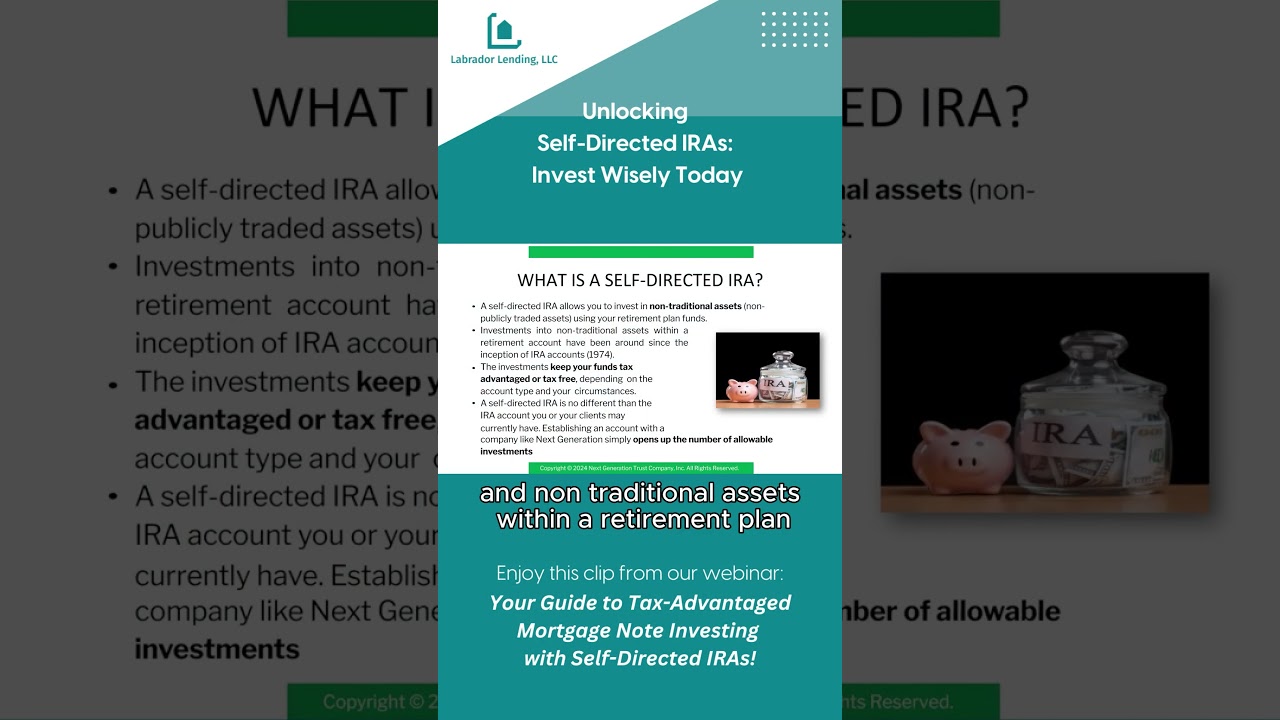
What Exactly is a Self-Directed IRA?
Unlike traditional IRAs that are managed by a brokerage firm, a Self-Directed IRA puts you, the investor, in the driver’s seat. You choose the assets you want to invest in, as long as they comply with IRS regulations.
Think of it this way: a traditional IRA is like ordering a meal from a limited menu, while a Self-Directed IRA is like having access to a fully-stocked kitchen where you can create your own culinary masterpiece.
Why Consider a Self-Directed IRA?
- Diversification Beyond the Norm: SDIRAs allow you to move beyond the traditional stock market and diversify your portfolio with assets that have low correlation to stocks and bonds. This can help mitigate risk and potentially enhance returns.
- Potential for Higher Returns: Alternative assets often offer the potential for higher returns compared to traditional investments, especially during periods of market volatility. Real estate, for example, can generate rental income and appreciate in value over time.
- Control and Flexibility: You have complete control over your investment decisions. You choose the assets, negotiate the deals, and manage the investments directly (or through a qualified custodian).
- Tax Advantages: Like traditional and Roth IRAs, SDIRAs offer tax advantages. Traditional SDIRAs offer tax-deferred growth, while Roth SDIRAs offer tax-free growth and withdrawals in retirement.
- Investment Opportunities Aligned with Your Passion: Do you have a deep understanding of a particular industry or asset class? An SDIRA allows you to invest in what you know best, leveraging your expertise for potentially greater success.
What Can You Invest in with a Self-Directed IRA?
The possibilities are vast, but here are a few examples:
- Real Estate: Residential properties, commercial buildings, land, tax liens
- Precious Metals: Gold, silver, platinum, palladium
- Private Equity: Investing in privately held companies
- Cryptocurrencies: Bitcoin, Ethereum, and other digital currencies
- Promissory Notes: Lending money to individuals or businesses
- Limited Liability Companies (LLCs)
What are the Downsides?
While SDIRAs offer exciting opportunities, they’re not without their challenges:
- Complexity: Managing an SDIRA requires a greater understanding of IRS regulations and the specific assets you’re investing in.
- Due Diligence is Crucial: You are responsible for performing thorough due diligence on all potential investments.
- Limited Liquidity: Some alternative assets, like real estate, can be less liquid than stocks or bonds, making it difficult to access your funds quickly if needed.
- Increased Risk: Alternative investments can be riskier than traditional investments, so it’s important to understand the potential downsides before investing.
- Custodian Selection: Choosing the right custodian is crucial. Ensure they are experienced in handling the types of assets you plan to invest in and that they provide the necessary reporting and administrative services.
- Prohibited Transactions: Certain transactions are prohibited by the IRS, such as buying assets for personal use or transacting with disqualified parties (like family members).
Is a Self-Directed IRA Right for You?
Self-Directed IRAs are not for everyone. They are best suited for:
- Experienced Investors: Individuals who have a strong understanding of finance and alternative investments.
- Those Seeking Diversification: Investors looking to diversify their portfolio beyond traditional assets.
- Individuals Willing to Put in the Time and Effort: SDIRAs require more active management and due diligence.
- Those with a Long-Term Investment Horizon: Alternative assets often require a longer investment timeframe to realize their full potential.
Conclusion: Time to Wake Up to the Possibilities
Self-Directed IRAs offer a powerful tool for building a diversified retirement portfolio and potentially achieving higher returns. However, they require careful planning, due diligence, and a willingness to learn. If you’re looking for more control over your retirement savings and are comfortable venturing beyond the traditional investment landscape, it’s time to wake up to the possibilities of a Self-Directed IRA. Research your options, consult with a qualified financial advisor, and unlock the hidden potential within your retirement plan. The future of your retirement might just depend on it.
LEARN MORE ABOUT: IRA Accounts
TRANSFER IRA TO GOLD: Gold IRA Account
TRANSFER IRA TO SILVER: Silver IRA Account
REVEALED: Best Gold Backed IRA


0 Comments